
Is ETF Breakthru Connect Right for You?
Are you on the fence about ETF Breakthru Connect? Not sure if it’s actually for you? Matt Middleton steps through the four major cohorts that ETF Breakthru Connect is most beneficial for in this quick explainer. Spoilers: the entire ETF ecosystem benefits.

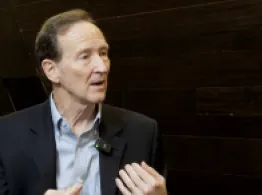
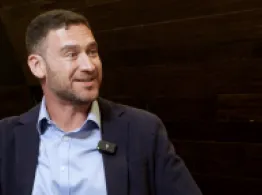
Matt Middleton, CEO of ETF.com and Founder & CEO of Future Proof, breaks down the core market for ETF Breakthru Connect and how each of the four major cohort benefits from attending with Dave Nadig, President & Director of Research at ETF.com.
The Entire Industry Benefits
Nadig: When you go to Future Proof, it's pretty obvious who it's for. You walk in the door and everybody's got a sign and everybody's got a badge. This is a broad event though. This could be for anybody practically because it's a virtual event. Who is the real market for this? Who's the ecosystem that you expect to show up in June having these meetings?
Middleton: Yeah, so I think there's actually four major cohorts I kind of look at. The largest majority will be the financial advisor kind of wealth management category. And that's going to be probably predominantly RIA, broker dealer, bank. It's going to be practicing advisors, but also executives that are thinking about investment delivery, right? Like how does that change? What solutions are we using?
Which then brings to the next point, right? So obviously the next biggest cohort is going to be the asset management group, right? The product providers that are packaging these strategies in ETFs and need to make those connections with advisors of all types. The one might not be obvious as we think about ETF would be the tech providers, right? And so, the truth is everything is technology, right?
I think it was a couple of years ago, I had a good laugh about BlackRock. BlackRock came out and said, as the world's largest asset manager, “We're a tech company."
Nadig: We're a tech company. Yeah, I remember.
Middleton: And it's like, well, the reality is they are a tech company, right? Everyone is a tech company. And so, you when you think about FinTech and Big Tech, technology runs the world is going to be even more prevalent into the, you know, many years into the future. And so technology is a a linchpin to these discussions, especially when you think about portfolio construction and investment delivery overall, technology is the discussion point.
The last piece is kind of a catch-all. It's really the larger financial services ecosystem. The way to think about this is anyone who plays a role in the delivery, distribution, production of ETFs, client service, wants to meet with wealth managers—is the glue, I would say, between the three previous groups I mentioned—have a place to be here.
More Frequent Connection in Today’s ETF Industry
Nadig: And I think that an interesting thing that's happened in the ETF market is because ETFs have become so endemic into how we think about investing, how we even think about what markets are doing. We now measure the ETF to say, well, what's oil actually doing? We talk about things like tax aware long/short, or 351 conversions, or all these freaky edges of the ETF market where we're either getting interesting exposures or doing interesting tax management stuff.
The actual players in that space are often not an ETF issuer; they're an accountancy, or they're a consultant, or they're a custodian, right? Or they're a software platform who's collecting all the 351 providers. So I feel like there is this whole other ecosystem of people who are neither asset manager nor financial advisor that are actually really important to the ETF ecosystem now. And I'm guessing this is gonna be a great place to meet those folks too.
Middleton: I think that's the huge opportunity, right? Like we have these big cohorts, we could sit there—there’s databases, you could find these people. Most of the time, if they're big asset managers, you know the person leading this. But to your point, there's so much innovation in the ETF space happening right now. There's also a lot of noise. Every single key constituent in the ETF industry needs to be met with at certain points more frequently than ever before.
And again, when you think about this, sometimes to the average RIA, it's hard to understand who the right person is to get the right answer to your specific need. Not just understanding what that product does, but how it works, right? And I think this platform is a very efficient way to one, discover the right players in these kind of new innovative areas, but to allow you to have connections with them to hopefully further that and deepen that relationship so that you could inform your client way better.
On the industry side, the same is true. There's more stakeholders involved in the production and distribution and delivery and success of the ETF industry. It's not just reserved for an annual catch up at an event. You need to be having these conversations more frequently. And so again, this provides a very simple way to have those meetings and those touch points over the course of two days than you would otherwise having to find time to travel to a city, or find a time that works, or schedule a call, whatever the case may be.
Forging Connections Now for Future Client Needs
Nadig: I think for advisors, there may be another value proposition too. Advisors are very understandably protective of their time. Like they have to be.
Middleton: They have to be.
Nadig: And there are lots of interesting things going on that every advisor could be paying a lot of attention to. Tax aware long/short being something that's very common right now. That it's in all the buzz. Most advisors aren't going to go build a tax aware long/short practice, but they kind of want to know what's going on because maybe they'll get that whale client who comes in the door with 150 million dollars that they really need that solution for.
I've talked to a few advisors who are reluctant to go call some of those providers because they know they're not really a client yet, but they really want to know for when they are. This feels like a great opportunity for an advisor and for that service provider to make a connection, to know who to call when they have a question in six months without sort of going into the sales pipeline. And no advisor wants to feel like they entered the sales pipeline, right?
Middleton: It's 100 % true. The categorization, the data collection allows you to now to find the five best people for this specific need. Even if you make that one connection, now you have those five people in your Rolodex. And again, you're not—you just didn't click a lead magnet and now you're part of their HubSpot activity.
Nadig: You're in their Salesforce Pro queue.
Middleton: Exactly. Exactly.