
How ETF Breakthru Connect Puts Boundaries Around Your Data
Feeling reticent to sign up for another program that will capture your data and enter you into a Salesforce funnel? We’ve got great news for you about ETF Breakthu Connect.

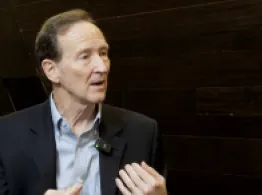
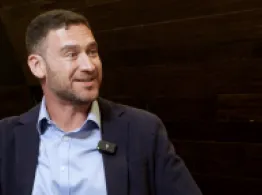
Curious about ETF Breakthru Connect but feeling less certain about how the virtual meetings use your data? Matt Middleton, CEO of ETF.com and Founder & CEO of Future Proof, sat down with Dave Nadig, President & Director of Research at ETF.com to talk about the ways the limited ways the program uses your data, and all the ways it does not.
“We Don’t Want to Collect Data for Data’s Sake"
Nadig: I want talk about the data part of this and sort of how people onboard into something like this. If you're collecting all this data to try to make sure that Dave Nadig is connecting with somebody he can actually have a conversation with, you got to be doing more than just collecting my name and my email address and the fact that I work at ETF.com. How extensive is that process and how should folks who sign up think about really going into talking about their interests and their focus and their practice and the stuff they want to accomplish in a meeting? Like how freeform is that and how important is it to the process?
Middleton: Yeah, no, it's a great question. Look, I think the way we've designed this and have revised it over the different programs and iterated on it has been useful. We started with the base case of we don't want to just collect data for data's sake. I think our industry does that a lot. It's like everyone wants to talk about data. But what we like to think about is what is actionable data and what is actionable data for our use case. In our use case, it's connecting people through the meetings program, right?
And so we collect, again, based on a financial advisor, we typically collect around 120 unique data points. And that's everything from first name, last name to firm name down to assets, number of employees. Your interests — like from the investment side, what asset classes are you allocating to in the next 18 months? If there's things you want to learn on the practice management side, we have those kind of bucketed into more popular areas. If you're thinking about fintech solutions, this is what it is. And then the truth is, as you think about the other side, right? So you have to build the questions that get captured the data and how is it going to be displayed back?
And what I've learned over the course of these iterations is specifically in the advisor side, people want to find ways to meet with others who are kind of at their stage of firm trajectory. So that could be based on assets, right? When you unlock a certain level of assets, maybe your clientele changes, or maybe the types of products you offer change, or your sophistication. So we want to be able to allow other people to seek people in similar roles. Also, the size of your firm matters. And so when you think about, "I have 10 employees", well, Dave, you might have 10 employees too. So what we're as leaders facing are probably similar. And so maybe that's a point and a connection point. So you go on and on.
And really what you get to is what almost feels like an infinite number of meeting use cases. And that's the beauty of this. If I had to map, and we probably should do it, if I had to map over the 50,000 meetings that take place at Future Proof Festival in two days, what's the core of those meetings? I guarantee there would be like, it would just be this chaotic web of just like connection points for who…
Nadig: Word cloud.
A Different Approach to the Engagement Model
Middleton: Yeah, just like exactly. And that's the beauty of this because this industry is changing rapidly. The data, I think people at first come into it like, “Why am I giving you my data?" Because we're all protective of like, they're going to exploit this. For us, we don't exploit it. We don't do anything else with it, but just evaluate it, make sure it's accurate, display it back to others who want to meet with you to protect and respect your time. And then the secret to all of this is rewriting how the engagement layer works around events.
So the big aha moment that advisors got with us at Future Proof, which they'll see with ETF Breakthrough Connect, is that we don't sell your data. We don't sell your names, your emails. We all laugh about it. We've been in the event space long enough. We used to do this too. It's like, you know when that sponsor attendee list goes out because everyone on that list gets the, “Come to my dinner, come to my booth. Hey, I'm speaking here."
Nadig: 200 emails. Yeah.
Middleton: Exactly. And then people wonder why they don't get the right level of human-to-human interaction and engagement at the event. Well, you just beat them over the head with your brand, with your activity, with your speaker. No one wants that. They didn't sign up for that. And so what we saw was, we don't want to restrict the sponsor from access, but we need to create it on the advisor's own terms. And that's what these programs do.
It allows them to be in control of their schedule, who they want to meet with. But more importantly, it actually cuts the noise out for the sponsor. And so at first sponsor like, “Wait, we don't get an attendee list. We don't get this?" And it's like, yes, but just trust it. And then we went a step further saying, “You can't actually reach out to anyone inside the program, outside the program." So all you're doing is pressing this button, highly interested in meeting, somewhat interested or nothing at all.
If you go and like, “Oh, I know Dave's going," and I go and hit you up on LinkedIn or say, “Hey, I saw you there," we'll kick you out. And we're very stringent on that. And over time, people, again, met with change. It's like, reluctant, “This doesn't work," or “This is, I'm not paying for this." And then as people experience it, they're like, “This is the only way to do it." Right? Like people want to meet me.
Nadig: If you’re trying to grow your network and you're not just using this as a social club, then absolutely, this is like secret sauce.