
“Advisors Are Mechanics and They Are Guides”: AI & Advisorship
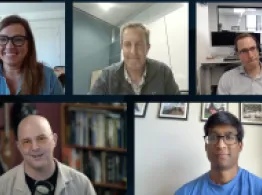
Are you relying too much on AI in your practice and losing the forest for the trees? Shaping Wealth’s Brian Portnoy and Zach Conway of Seeds sit down with ETF.com’s Dave Nadig to talk about AI and how they’re using it as a tool to enhance the many hats an advisor wears.

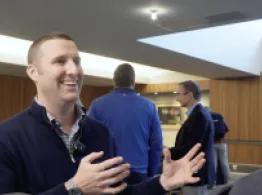
It’s easy to get swept up in the technical capabilities of modern tools like AI—the ability to crunch massive datasets and filter through all the noise that clutters our day-to-day is impressive. But as this conversation from the ETF Beach House at Future Proof Citywide between Dave Nadig, President & Director of Research at ETF.com, Brian Portnoy, Founder & CEO of Shaping Wealth, and Zach Conway, Founder & CEO of Seeds underscores, there’s so much that gets lost in translation when relying too heavily on AI—particularly as an advisor. It turns out that when you focus too much on the mathematical side of the equation without accounting for the human narrative, you miss the forest for the trees.
There’s a clear parallel here for how we interact with technology. In the advisor world, you might have an expert who knows a client's dog’s name and remembers small quirks about them that affect their investment choices, but struggles with the complex math of investing, or investing nuances that make meaningful differences for portfolios. Similarly, an AI with strong technical rigor but one that communicates like a hollow chatbot lacks resonance. The real value lies in tying those two things together. An effective system should handle the heavy mathematical lifting while also still framing that information in a way that respects the user's unique journey and emotional context.
Ultimately, in an era where everything can be automated or synthesized, authenticity becomes the only real currency. It turns out that the best use of AI isn't to mimic a human perfectly, but to be an authentic tool that helps people understand their own relationship with their goals. It’s about leaning into that clarity so the user remains the hero of their own story. Conway and Portnoy both share how they’re bringing that to life in their practices.