
Dividend Trap Alert: Using the Active Edge to Protect Your Portfolio
Find out why a lower-beta dividend portfolio is the defense you need. Discover how active management avoids value traps and the benefits of the ETF wrapper for income.

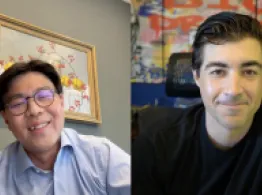
Brandon Clark, Director of ETFs at Federated Hermes, shares why the firm brought their nearly $30 billion dividend strategy to ETFs, the dangers of dividend traps, and why younger investors are looking to traditional dividends at Future Proof 2025.
Transcript
Opening: On ETF Wrapper Demand
Clark: Advisors are looking to consume our best dividend strategy. We've got to get in the ETF wrapper. What's great about the ETF wrapper is the things that come along with ETFs: tax efficiency, the slightly lower costs.
Bringing the Dividend Strategy to ETFs
Nadig: Hi there, I'm here with Brandon Clark from Federated Hermes. You guys have been in the industry here now for a couple years with some of your bigger strategies. FDV is the one I know. That's your big dividend strategy. That really came out of the mutual fund background, right? So, tell me a little bit about getting into the ETF wrapper and why that's really caught on with advisors.
Clark: At Federated Hermes, we're thinking about ways to extend our expertise into the ETF wrapper. And I always look at it as we want to be able to meet clients where they want to be met. Right? And a lot of being met is just vehicle delivery. And so FDV is a strategy that we've been running in both mutual fund and SMAs. We've been running them for decades. It's almost a $30 billion strategy across the vehicles.
We looked at that and said, “Okay, advisors are looking to consume our best dividend strategy. We've got to get in the ETF wrapper.” And what's great about the ETF wrapper is the things that come along with ETFs: tax efficiency, the slightly lower costs, right? We're not running index funds, we're not going to three basis points. But, the ability just to run that strategy in a very tax-efficient way allows advisors to really think about where they're using that product, how they use it for clients, and deliver that income that they are really looking for in this environment for clients.
Younger Investors Going Traditional For Income
Nadig: So, income has been a big, big topic here certainly at Future Proof. We have lots of new products that have launched. Some of them are sort of options-based and sort of hyper income products, but also there's been this real discovery of traditional dividend investing by younger investors. There was a recent article in Bloomberg about that. Talk to me a little bit about that. Is dividend investing kind of on the upswing?
Clark: I think there's a couple things with that. One, I would say yes. People are looking for income in a lot of various ways. So whether it's within fixed income again, right? Fixed income is actually paying, but even on the dividend side, folks are still looking for their equity-like returns. With the market environment that we're in – we've seen unbelievable equity market returns over the last few years.
As we're starting to see the potential for rate rises, as we're starting to see some, I'll say, uncertainty around tariffs and all the just overall market uncertainty that's out there, having a lower beta, defensive portfolio that pays income is something that clients are really starting to look at. And especially the younger generation now, because they've been used to seeing these kind of go-go returns. They're starting to see a little bit more volatility. How do I just protect some of these assets, get lower beta, keep my 3 and a half to 4% distributions, and just kind of maybe ride out the storm?
The Active Advantage When Dividend Investing
Nadig: And is the value of active management in a dividend strategy avoiding things like the value traps where you're getting sort of a lot of income, but the reason is the stock's headed to the toilet?
Clark: Yeah, I think on that side of it, the value that active brings is exactly that. You can build an index that's got a dividend yield of 4 or 5%. Give me all my high dividend yielding paying stocks, sort of them out, that's what I want.
For us, we do a lot of work around fundamental research on the companies. Is that a value trap? Is this a sustainable dividend? Is it, are there any kind of chinks in the armor that might start to pop up that a company may not be able to pay their dividend or cut their dividend? So we spend a lot of time on the active side trying to make sure that we're building a portfolio that has the best companies in there, with the best dividend yields that are sustainable and can continue to deliver that income to clients into the future.
Nadig: All right. Well, it sounds like you guys are onto something with the, certainly with that fund and the rest of them. Good luck.
Clark: Thanks, man.
Nadig: Good to see you, Brandon.