



How Prop Firm Models Are Adapting to ETFs
Understand how ETF prop firms operate, how exchange traded funds work in evaluations and funded programs, and how they can improve transparency.

How Prop Firm Models Are Adapting to ETFs
Most prop trading firms still focus on asset classes like forex, cryptocurrency, and futures trading because they offer leverage, round the clock access, and enough liquidity for fast execution. Yet, a smaller group of prop firms has started adding exchange-traded funds (ETFs) for prop traders who want pricing coming from an exchange itself rather than from an internal feed, along with a structure where fills can be checked against public data.
The shift in operations is subtle, but it changes the way prop firms structure their funding programs and how they evaluate traders.
How ETF Prop Trading Works
The reliable ETF prop firms follow the same core process used across funded trading models, but using exchange-traded products adds a clearer and more structured way to validate performance. When prop trading, you begin by working through an evaluation process designed to measure consistency and control rather than pure profit potential.
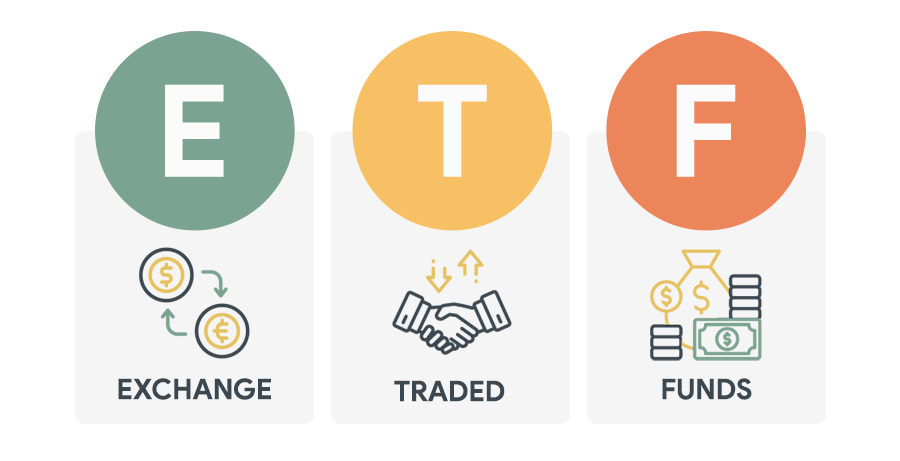
Profit targets sit alongside firm drawdown and daily loss limits, and the rules are there to stop you slipping into emotional or impulsive behaviour. Before you become a funded trader, the firm wants to see stable execution, sensible position sizing, and a clean ratio between average wins and losses, and this is usually proved through an evaluation process.
Once you show stability, the prop firm provides you with a funded account that either mirrors live exchange conditions or connects straight to the market. A profit sharing agreement is set from the start and often improves as you build a track record, and you receive your first payout usually within a few weeks of becoming a funded trader. Any scaling is gradual, whether it applies to trading account size, profit splits, or both, because the aim is steady performance rather than short runs of high risk trading.
With ETFs, these ideas fit neatly because the products themselves are built around open pricing and measured volatility. Exposure is spread across a basket instead of a single asset, and the price reflects an active marketplace rather than a broker’s internal feed.
Execution and Market Access
Execution is where ETF prop trading most clearly separates itself from synthetic derivatives. Instead of trading on internally priced CFD feeds, ETF prop firms connect directly to live market data so that every order and fill reflect the real conditions of the exchange.
Some prop firms will operate in a simulated trading environment where they replicate order books tick for tick, while others do actually place trades through exchange gateways, recording verifiable fills and timestamps.
Each approach to ETF prop trading carries its own operational trade offs and risks. Simulated trading systems are easier to scale across many traders and can be maintained with fewer infrastructure costs, while direct exchange routing provides the most authentic trading experience, but comes with the additional expenses of data fees, brokerage costs, and compliance oversight, which are often passed onto the trader.
Regardless of which prop pricing model a firm uses, the goal is always to reflect real market dynamics. Firms usually limit their ETF product lists to products with good liquidity, tight spreads, and steady trading activity to keep execution reliable.
Comparing ETF Prop Firms to Other Trading Methods
ETF prop trading sits between CFD based ETF trading and standard ETF investing. You work with exchange pricing instead of internal feeds, but the prop firm still sets firm limits on your risk and exposure. The outcome is a cleaner structure than funded accounts built on products like forex or crypto derivatives, where execution often depends on the broker’s own pricing engine.
How are ETF prop firms different to ETF CFD brokers?
CFD trading in ETFs provides access to price movement without direct market interaction. Spreads, financing, and dividend adjustments are all managed internally by the broker, allowing for high leverage and flexibility but creating potential inconsistencies during volatile or illiquid periods. Execution quality depends on the broker’s feed rather than the exchange itself, and margin calls often replace structured drawdown limits as the mechanism for risk control.
ETF prop firms replace this synthetic layer with live market pricing and strict exposure limits. Leverage is lower, but risk is managed continuously through automated oversight rather than reactive margin processes. Because pricing and execution occur on regulated exchanges, every fill can be verified, creating a record of trader performance based purely on observable market outcomes. This model allows firms to evaluate your capability under trading conditions that match institutional standards while reducing the distortions inherent in synthetic feeds.
How do ETF prop firms differ from traditional investment firms?
ETF prop firms use exchange traded products for short term trading under defined risk limits, while traditional investment firms use them for long term allocation and income. In a prop trading setting, the focus is on timing, liquidity, and execution quality, because positions are taken to capture controlled intraday or short term moves. The product is the same, but the purpose is different, you’re trading for repeatable performance rather than holding for dividends, compounding, or broad diversification.
Ownership rights, dividend accruals, and long term cost factors don’t play a role in this trading environment. What matters is how you handle price movement within the firm’s volatility limits, and how consistently you execute under real market trading conditions.
The Direction of ETF Prop Trading
ETF based prop programs are still small, but they point to a clear shift in how funded trading operates. Firms are moving toward models built on exchange data, auditable execution, and strict trading rules that match institutional practice. This gives traders a clearer framework to work in and provides risk teams cleaner information to evaluate performance.
Whether the segment grows or stays specialised will depend on how quickly firms adopt the operational standards that ETFs require. What’s already clear is that ETF programs bring funded trading closer to regulated market structure without losing the flexibility that makes prop models appealing. They also narrow the gap between retail style funded accounts and the wider exchange traded product ecosystem by grounding every action in observable market conditions.
Read more: Crypto ETFs vs Crypto ETF Derivatives (CFDs): Which Is Really Right For You?


