There’s Still Time: Gold and Silver Miners Aren’t a Crowded Trade
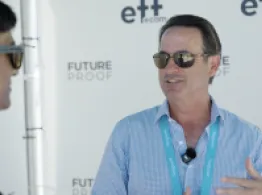
According to John Hathaway, Senior Portfolio Manager at Sprott Asset Management, the run-up in precious metals may still be in its early stages as argued by Hathaway in the October Sprott Gold Report.

Gold and silver miners have delivered standout returns in 2025, yet many investors are still sitting on the sidelines. Despite that track record, participation by institutional and individual investors remains minimal, Hathaway wrote, while adding that precious metals equities may still offer “considerable upside.”
Hathaway’s analysis underpins the case for active exposure to miners through the Sprott Active Gold & Silver Miners ETF (GBUG), which seeks to capitalize on continued strength in both gold and silver producers while taking a selective approach to portfolio construction.
It’s Not Too Late to Participate
As of October 31, 2025, physical gold had gained roughly 55% year to date, while gold mining stocks were up about 115%, according to Bloomberg. Over the same period, the S&P 500 rose 14%.
Despite the outperformance, Hathaway still sees “demonstrable undervaluation” in the precious metals sector, along with a lack of broad investor participation.
That could change as more investors recognize the improving fundamentals and the stronger balance sheets across mining companies.
“Shakeouts will inevitably occur,” Hathaway cautioned, noting that short-term pullbacks are normal after strong runs. However, “we believe gold and precious metals should constitute core strategic investment positions, similar to the conventional wisdom of the 1960s and 1970s,” he said.
Gold Isn’t a Crowded Trade
One reason Hathaway sees room for further upside is that investor positioning remains light. He notes that assets in the largest gold mining ETF have been declining even as prices rise, suggesting the gold mining trade isn’t crowded or overheated.
Gold mining stocks currently represent less than half a percent of global equity market capitalization, compared to a high of 0.7% in 2011.1
“When viewed through the lens of negative investor flows and discounted valuations, descriptors like ‘crowded,’ ‘overbought’ and ‘overheated’ do not hold water,” Hathaway wrote.
That combination of improving fundamentals and limited investor exposure, he argues, leaves the sector well positioned if gold prices continue to rise.
A Changing Role in Portfolios
Another theme gaining traction is gold’s potential role in diversified portfolios. Hathaway highlighted recent commentary from Morgan Stanley and Goldman Sachs suggesting that traditional 60/40 models could benefit from a dedicated gold allocation—something like a 60/20/20 mix of equities, bonds, and gold.
The reasoning is that in recent years, bonds have struggled to offset equity drawdowns as inflation and interest rate volatility have risen. Physical gold can serve as a risk diversifier, while mining equities may offer additional upside through leverage to higher metal prices.
Better-Run Miners, Broader Opportunity
A decade ago, many investors shunned gold miners for their aggressive expansion and poor capital discipline. Today, Hathaway says the industry looks different.
“We observe that the overwhelming focus is on return on capital, returning excess capital to shareholders in the form of dividend increases or share buybacks, and disciplined capital allocation,” he wrote.
The shift toward operational efficiency and shareholder returns may have improved the overall perception of the sector’s quality, potentially reducing one of the traditional risks of investing in miners.
These operational improvements, combined with higher gold prices, could make equities in the space more sustainable sources of potential alpha.
Why Active Management Matters
Not all mining companies have benefited equally. Over the past five years, the performance gap between top- and bottom-tier precious metals miners has exceeded 171 percentage points, according to data from Bloomberg and FactSet.
That dispersion, Hathaway says, is where active management can make a difference. Rather than tracking a market-cap-weighted index, Sprott’s active approach allows portfolio managers to overweight their highest-conviction positions and identify underfollowed mid- and small-cap opportunities that may benefit from M&A or production growth.
The Sprott Active Gold & Silver Miners ETF (GBUG) is designed with that flexibility in mind. Managed by Sprott’s experienced precious metals team, GBUG seeks to outperform passive mining benchmarks through bottom-up research, valuation discipline, and dynamic allocation between gold and silver producers.
Silver’s Catch-Up Potential
Silver has also reemerged as a potential opportunity. After years of underperformance, the metal has rallied sharply in 2025, up more than 70% year to date through October. Still, the gold-to-silver ratio remains above its long-term average, suggesting silver could have further room to run if supply constraints persist.
“Several years of deficits in silver have led to extreme market tightness,” Hathaway wrote. “A breakout to new silver price highs, along with a re-rate of silver equities to long-term averages, would be in keeping with the latter half of previous precious metal bull markets.”
For investors, GBUG’s exposure to both gold and silver miners provides a way to participate in that dual theme without having to pick individual companies.
A Strategic Allocation
Gold’s recent strength has surprised many market participants, but Hathaway believes the fundamental case remains intact. “Tepid investor flows, discounted valuations and the structural need for diversification suggest that capital allocation to the sector is still in its early stages,” he wrote.
For investors seeking diversified exposure to the space, GBUG offers a potential solution focused on actively managed opportunities in both gold and silver mining equities.
Important Disclosures & Definitions
An investor should consider the investment objectives, risks, charges, and expenses carefully before investing. To obtain a Sprott Active Gold & Silver Miners ETF Statutory Prospectus, which contains this and other information, visit https://sprottetfs.com/gbug/prospectus, contact your financial professional or call 888.622.1813. Read the Prospectus carefully before investing.
Alpha: A measure of how much better (or worse) an investment performs compared to its benchmark index or the broader market.
Gold-to-Silver Ratio: The number of ounces of silver it takes to buy one ounce of gold.
The Sprott Active Gold & Silver Miners ETF is new and has limited operating history. Investors in the Fund should be willing to accept a high degree of volatility in the price of the Fund’s shares and the possibility of significant losses. The Fund will be concentrated in the gold, silver and precious metals mining and related industries. As a result, the Fund will be sensitive to changes in, and its performance will depend to a greater extent on, the overall condition of the gold, silver and precious metals industry, highly dependent on the price of gold and silver bullion. The gold, silver and precious metals industry can be significantly affected by competitive pressures, central bank operations, events relating to international political developments, the success of exploration projects, commodity prices, adverse environmental developments and tax and government regulations. An investment in the Fund involves a substantial degree of risk. The Fund is not suitable for all investors. The Fund is considered non-diversified and can invest a greater portion of assets in securities of individual issuers than a diversified fund. As a result, changes in the market value of a single investment could cause greater fluctuations in share price than would occur in a diversified fund.
The Fund adviser’s judgments about the growth, value, or potential appreciation of an investment may prove to be incorrect or fail to have the intended results, which could adversely impact the Fund’s performance relative to its benchmark.
Shares are not individually redeemable. Investors buy and sell shares of the Sprott Active Gold & Silver Miners ETF on a secondary market. Only market makers or “authorized participants” may trade directly with the Fund, typically in blocks of 10,000 shares.
Funds that emphasize investments in small/mid-cap companies will generally experience greater price volatility. Diversification does not eliminate the risk of investment losses. ETFs are considered to have continuous liquidity because they allow an individual to trade throughout the day. A higher portfolio turnover rate may indicate higher transaction costs and may result in higher taxes when Fund shares are held in a taxable account. These costs, which are not reflected in annual Fund operating expenses, affect the Fund’s performance.
Sprott Asset Management USA, Inc. is the Investment Adviser to the Sprott Active Gold & Silver Miners ETF. ALPS Distributors, Inc. is the Distributor for the Sprott ETFs and is a registered broker-dealer and FINRA Member. ALPS Distributors, Inc. is not affiliated with Sprott Asset Management USA, Inc.
1https://sprottetfs.com/insights/dips-the-rx-for-acrophobia/