BND Is About to Erase the 2022 Bond Crash. TLT Isn’t Close.
The aggregate bond market has nearly healed from its worst drawdown in a generation.

The largest bond ETF in the world is closing in on a milestone that looked out of reach three years ago. The Vanguard Total Bond Market ETF (BND) now sits roughly 2.4% below its total-return peak, the high it set in August 2020 when the Federal Reserve had pinned rates near zero and Treasury yields were scraping historic lows.
At the bottom of the 2022-2023 rate spike, the fund had dropped as much as 18.5% from that level. Clawing most of the way back from an 18% hole in an investment-grade bond fund is not a small feat.
It nearly finished the job earlier this year. In February, BND got within 0.8% of a fresh all-time high on a total-return basis before slipping back to where it trades today. If rates don't spike from here and the fund keeps banking the yield it's now throwing off, it should reach new highs later this year or at some point next.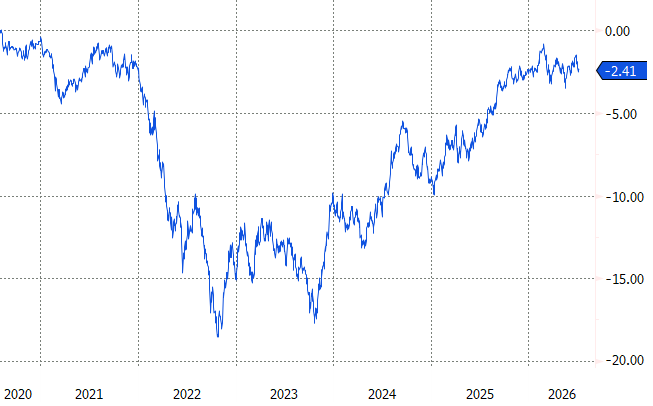
How Bad It Got
To appreciate why that matters, it's worth remembering how ugly things got. Bonds had a phenomenal run in the decade after the global financial crisis, when the Fed held rates at rock-bottom levels to nurse the economy back from the worst downturn since the Great Depression.
That era ended abruptly. In 2022 and 2023, the Fed hiked aggressively to fight the worst inflation in decades, and bond prices, which move inversely to interest rates, tumbled.
What made the episode sting wasn't only the size of the loss. Bonds sold off at the same time equities were selling off, doing the exact opposite of the portfolio protection most investors had bought them for.
A Higher-Rate World
Equities have since rebounded and bonds have gone relatively quiet, trading in a range rather than making new lows.
We're clearly in a different regime now, one where rates sit structurally higher because inflation runs hotter, the AI investment boom is soaking up capital, and the market keeps eyeing a federal debt load that shows no sign of shrinking.
The fed funds rate has come down about 175 basis points from its 2023-2024 peak, but it's nowhere near the floor of the previous decade, and doesn't look like it's heading back there.
That backdrop has flipped what drives bond returns. Since the big drawdown, bonds haven't taken much of a further price hit, but they haven't rallied either. The heavy lifting now comes from yield. Because rates are elevated, the income these funds generate is meaningful again, and it's steadily eroding the losses from the spike.
During the last decade, most of the returns came from price. These days, for most of the bond market, it's the coupon.
It Comes Down to Duration
The catch is that "the bond market" papers over enormous dispersion. The single variable that decided what recovered and what didn't was duration, the measure of how sensitive a bond is to rate moves.
BND tracks the broad investment-grade universe and carries a duration of just under six years, squarely intermediate.
Funds at the short end barely got scratched. The iShares 1-3 Year Treasury Bond ETF (SHY) lost only 5.6% at its worst and now trades about 9% above its old peak, well into new-high territory.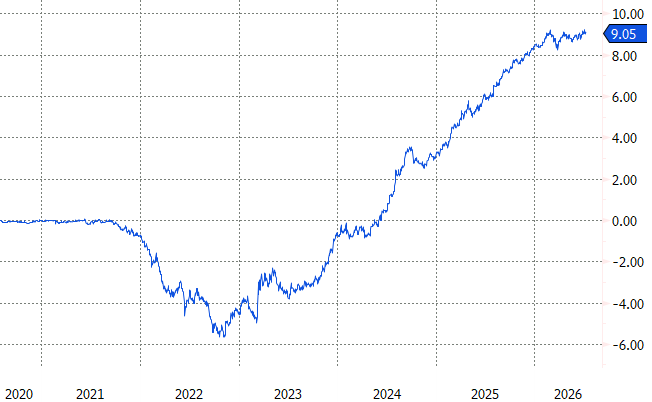
For the long end, it was the opposite story. The iShares 20+ Year Treasury Bond ETF (TLT) fell more than 48% at its low and remains down over 40%. Higher yields are chipping away at that hole, but very slowly, and long rates are sitting close to the highest levels they've reached since the spike, which gives the fund no help on price.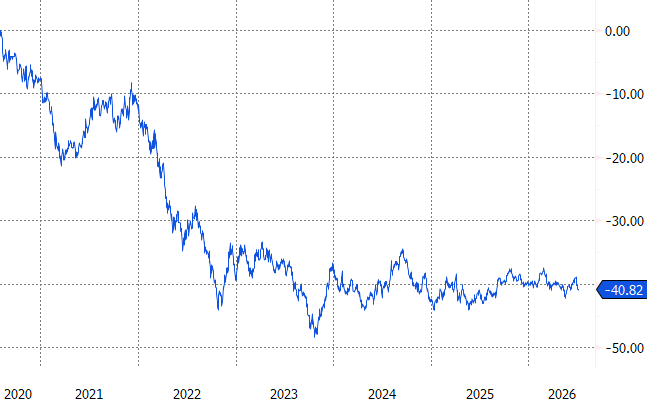
An investor who reached for duration in 2020 is still deep underwater, while one who stayed short has been whole for a while.
Duration isn't the only lever, though. Credit spreads have boosted BND along the way. The fund holds Treasuries alongside a large slug of corporates, and spreads on that corporate sleeve have narrowed notably since the spike, layering extra return on top of the Treasury recovery.
Where It Leaves Bonds
Put it all together and the picture is one of a bond market slowly edging back into the green from a genuinely steep loss, with the pace set by where you sat on the curve.
For the bulk of the market, the shock phase is over and yield now matters more than price. Long bonds are the exception. Their prices still swing significantly, and while they haven't made new lows, they're a long way from making up what the spike took.