China Is Driving This Year’s Gold ETF Boom
Chinese investors have poured $13.7 billion into gold ETFs this year.

Chinese gold ETFs have taken in massive inflows this year, helping fuel one of the strongest gold rallies in decades.
According to the World Gold Council, mainland China gold ETFs have pulled in $13.7 billion year-to-date, the second-largest total of any country. Those inflows have pushed China’s gold ETF assets to $31.4 billion, making it the fifth-largest market globally behind the U.S., the U.K., Switzerland, and Germany.
The U.S. still leads by a wide margin. Investors have added about $43.3 billion to U.S. gold ETFs this year, and total assets stand at $258 billion thanks to major funds like SPDR Gold Shares (GLD) and the iShares Gold Trust (IAU).
But investors outside the U.S. have also been active buyers. They account for more than 40% of this year’s global gold ETF inflows and represent 48% of the $514 billion invested in gold ETFs worldwide.
Gold’s performance has been exceptional. Prices are up 55% this year, the biggest annual gain since 1979, and have reached record highs above $4,000 an ounce.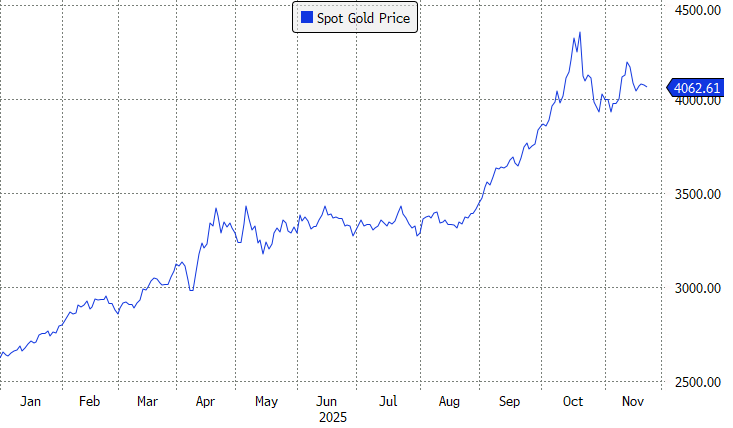
The U.S. draws most of the attention when it comes to gold ETFs, but it accounts for only about half of the global market. And even beyond ETFs, a large share of gold demand comes from jewelry, physical investment, central banks, and other non-ETF channels. All of these forces have contributed to this year’s historic run in gold.
China and India remain the world’s biggest physical buyers of gold, each responsible for roughly a quarter of global jewelry demand and a quarter of bar-and-coin demand. Through the first three quarters of the year, China purchased 321.6 metric tons of bars and coins, equal to about $41.4 billion at current prices.
The World Gold Council attributes the surge in Chinese demand to the sharp price rally, U.S.–China trade tensions, and concerns about domestic economic growth. Regulatory changes that allowed Chinese insurers to invest in gold for the first time this year may also support future demand.