

Silver Tops $50 for First Time Ever as Investors Pile Into SLV
Silver’s record run lifted SLV and other ETFs, though the metal still trails its 1980 peak in real terms.

The price of silver rocketed to record highs on Thursday, briefly touching $51.24 per ounce, surpassing both its 2011 peak of $49.80 and its 1980 high of $49.50.
The iShares Silver Trust (SLV), the largest silver ETF in the U.S. with roughly $24 billion in assets, extended its year-to-date gain to more than 70%. Silver has been riding the coattails of gold’s massive rally, which earlier this week pushed the yellow metal above $4,000 an ounce for the first time. The SPDR Gold Shares (GLD) is up about 53% this year.
Both metals have benefited from a potent mix of catalysts, including a weakening U.S. dollar, ballooning government debt, sticky inflation, geopolitical tensions, and growing concerns about the Federal Reserve’s independence. While gold has been the main beneficiary, silver has followed closely as investors speculate that the cheaper metal could play catch-up.
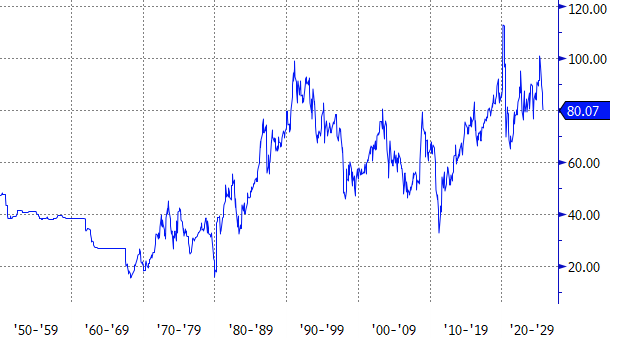
The gold/silver ratio—a gauge of silver’s relative value—has fallen to around 80, its lowest in a year but still well above the 65 level seen in 2016 and 2021, and far from the 32 level hit in 2011, when silver last reached record highs.
ETF Flows Pick Up
Investors have poured about $2 billion into U.S.-listed silver ETFs this year, including roughly $1.4 billion into SLV and $650 million into the abrdn Physical Silver Shares ETF (SIVR). That’s a fraction of the $36 billion that’s flowed into U.S. gold ETFs such as GLD and the iShares Gold Trust (IAU), but it’s significant given silver’s much smaller market size.
Global silver demand is projected to reach about 1.15 billion ounces in 2025, according to the Silver Institute. At a $50 price, that’s roughly $57.5 billion worth of metal.
By comparison, gold demand over the past four quarters totaled around 5,000 metric tons, or about 161 million ounces, according to the World Gold Council. At $4,000 per ounce, that equates to roughly $640 billion, making the gold market almost 13 times larger than silver’s.
Outsized Impact
The difference in scale is one reason ETF flows tend to have a much greater impact on silver. Gold is a deep, liquid market, accustomed to absorbing massive investment flows from ETFs, central banks, and physical buyers. Silver, by contrast, is far smaller and more industrial in nature, so even a few billion dollars of inflows can have an outsized effect on prices.
Nearly two-thirds of demand this year will come from industrial applications and photography, according to the Silver Institute. Jewelry and physical investment each account for about 17%.
ETF holdings of silver have actually declined in recent years, and total investment demand (physical plus ETFs) has hovered around 40 million ounces annually, or about $2 billion at current prices. That means the $2 billion of ETF inflows seen so far this year represent a meaningful swing in marginal demand.
Still Below Its Real Peak
While Thursday’s nominal price marks an all-time high, silver remains about 75% below its 1980 peak in real terms. The question now is whether the rally has staying power or if this proves to be another fleeting silver squeeze.