
Behind the Ticker: The FFF ETF
This episode of Behind the Ticker gets under the hood of the Founders 100 ETF (FFF) with Michael Monaghan, Founder and PM at Founder ETFs. Learn about the historical precedence for founder-led company outperformance and the rules-based strategy powering FFF.
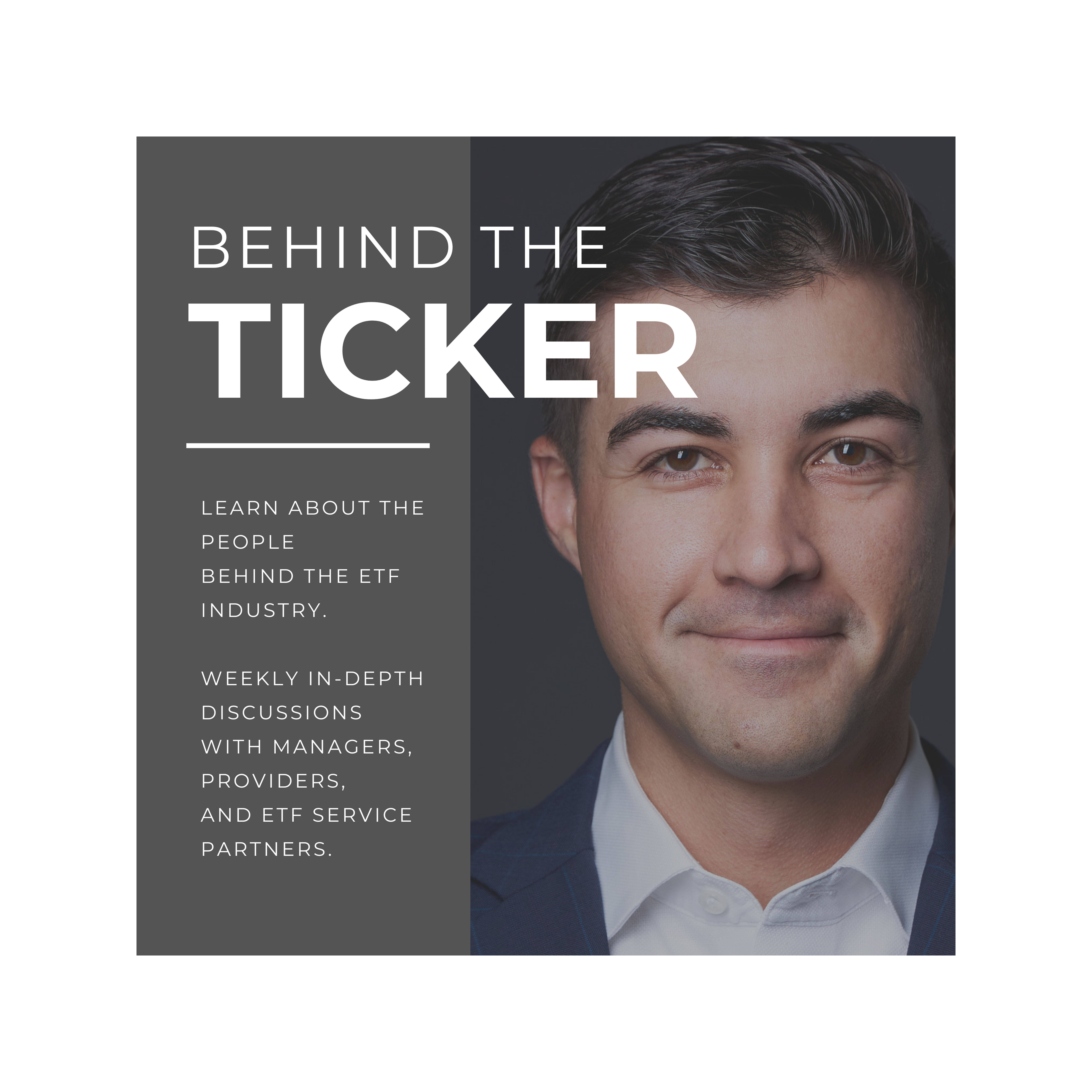
Behind the Ticker offers investors a chance to get under the hood of newer or more niche ETFs. Brad Roth, Managing Partner and CIO of Thor Financial Technologies, talks strategy and the human side of investing and ETFs with the individuals bringing these funds to market.
In this episode, Roth sits down with Michael Monaghan, Partner and Portfolio Manager of Founder ETFs, to talk the Founders 100 ETF (FFF). Monaghan shares about his previous experiences before Founders ETF and how they shaped the genesis for the strategy. He breaks down why visionary leaders drive meaningful differences when at the helm of their companies, and how FFF's data-driven strategy captures this opportunity set.
You can also listen to this episode on Spotify, Apple Podcasts, or your preferred streaming platform.
Saving the Best for the Third Act
Michael Monaghan is a career Wall Street veteran turned serial entrepreneur who describes his current venture — the Founders 100 ETF (FFF) — as the "third act" of his life. Act one was a traditional finance trajectory starting at Goldman Sachs, moving to a private equity fund launched with a Goldman partner in conjunction with the Carlyle Group, then stints at Sanford Bernstein and UBS. Act two was a 12-to-14-year entrepreneurial run building Beartooth, a technology company that enabled smartphones to connect without cell service. What started as a consumer product pivoted into a defense business. That founder experience — the mistakes, the pivots, the product development mindset — is what Monaghan says directly shaped his approach to building the ETF.
The inspiration for FFF came from a museum visit. Monaghan and his partner (also a former Bernstein colleague) were at the Smithsonian looking at the Fort McHenry flag and other exhibits, and the conversation turned to the idea that the people who built America were fundamentally different — iconoclasts. They asked: what if you built a portfolio of only publicly traded companies still being run by their original founders?
The core thesis is straightforward. Monaghan defines "founder-led" strictly: the original creator of the company must still be the executive running it, not just chairman, not running a division. So the fund owns Dell because Michael Dell still runs it, but doesn't own Apple because Steve Jobs is gone. Berkshire Hathaway was in the portfolio initially but was removed after Warren Buffett retired. To validate the factor, Monaghan's partner built an 11,000-stock database spanning 30 years of data, hand-constructed from old press clippings and SEC filings because founder status data doesn't exist in Bloomberg or FactSet. The data showed founder-led companies tend to outperform the S&P by roughly 3-5% annually, consistent with a Bain study showing 3X outperformance over 25 years.
As for why the factor works, Monaghan points to founders' ability to set vision, pivot decisively, and maintain moral authority within their organizations. He gave two examples: Zuckerberg's aggressive pivot away from the Metaverse when it wasn't working, creating massive value in the process; and Musk's proposal to merge SpaceX and xAI to solve AI compute and cooling constraints by moving infrastructure to space — something Monaghan argues a board-hired CEO could never pull off. He also referenced Jensen Huang's mentality of doing whatever it takes to drive Nvidia forward.
The fund mechanics work like this: they start with the 200 largest founder-led publicly traded companies, which also trade as a separate index under the Bloomberg ticker FOUNDERS. From that universe, they run a Bernstein-style factor model to select the 100 best. Those 100 are then given a modified market-cap weighting with a 7% cap at each quarterly rebalance — excess capital from the largest names flows down to smaller, often faster-growing holdings. The prospectus describes the fund as 80% rules-based and up to 20% discretionary, but Monaghan clarified the fund is effectively all rules-based. The discretionary sleeve exists primarily to allow them to buy IPOs that meet their criteria between quarterly rebalances (SpaceX being the obvious example everyone's watching for).
On portfolio composition, the top 10 holdings account for about 53% of the fund, driven by market-cap weighting rather than deliberate concentration bets. The remaining 90 names make up the other half. Monaghan emphasized that in analyzing 30 years of founder-led company data, roughly 50% of performance came from about 500 names — meaning alpha isn't just driven by mega caps but distributed across the full portfolio. The long tail of smaller names like Robinhood, Carvana, Viking Holdings, and Roblox matters.
From a positioning standpoint, Monaghan sees FFF as a core growth equity holding, not a satellite or thematic allocation. He made the case that FFF is a direct improvement over QQQ, arguing that Nasdaq has diluted its innovation focus over time by adding slow-growth companies to earn more listings, while FFF maintains pure exposure to founder-driven innovation. The fund runs 85% active share versus the S&P 500 and 70% versus QQQ — far higher than traditional active managers who used to tout 1-7% active share.
On distribution strategy, Monaghan is candid about being in the very early innings — the fund was about two months old at the time of recording. He acknowledges the ETF space is brutal, with roughly 10 new funds launching every week, but argues that 90-95% of those aren't long-term compounders — they're leveraged, inverse, or flavor-of-the-day products. His approach combines "things that don't scale" (personal outreach from him and his partner) with systematic tools for reaching smaller RIAs. He draws a parallel to his Beartooth days: retail and small RIA sales cycles move fast, while institutional and wirehouse channels are long-lead commitments, similar to selling to the defense sector.
Monaghan also touched on how AI tools have transformed his ability to operate as a small team, noting that as of roughly summer 2024, AI became better than expensive law firms at writing and analyzing securities filings — though they still verify everything with their SEC attorneys.
When pressed on what he wants to own that he can't yet, Monaghan first gave the systematic manager's answer (let the model pick), then got candid: SpaceX is the obvious one, calling Musk a generational entrepreneur. He's also excited about Stripe, noting he was an early enough user of the product that he used to speak directly with the Collison brothers. He mentioned Palmer Luckey and Anduril as doing interesting work refocusing defense spending on actually helping warfighters rather than cost-plus programs. But his most interesting answer was that he's most excited about the founders he doesn't even know about yet.
Investors can learn more at FounderETFs.com or email Michael directly at [email protected].
Disclaimer: The market insights, projections, and investment strategies expressed in this podcast are solely those of the contributor and do not necessarily reflect the views or opinions of ETF.com This content is provided for informational purposes and does not constitute financial, investment, or legal advice.
Discover the news, data, and voices shaping the ETF community. Follow along here.