“Advisors Solve the Problems Between the Tech”: Kitces on AI
Industry expert Michael Kitces breaks down why the real power of AI lies in "expediting tasks, not replacing jobs," and why a human talent pipeline remains more critical than ever. Insights you don't want to miss.

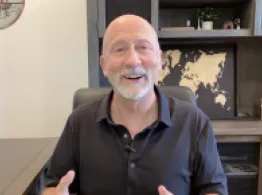
Michael Kitces, Chief Financial planning Nerd at Kitces.com, sat down with Dave Nadig at Schwab IMPACT 2025 to talk real world applications and implications of AI for the advisor industry. As someone tapped into tech advisor trends, Kitces offers valuable insights into what AI is, and what it isn't, as well as how the advisory model is evolving. The following is a full transcript of their conversation.
Transcript
Nadig: Michael Kitces, thanks so much for joining us. You've been writing a ton about AI and how it's intersected with advisor workflows. Everybody talks mostly about things like recording your meetings, which seems like a very thin end of the wedge. What's the real deal with advisor AI adoption right now?
Kitces: So the first thing I would say when we look at advisor AI adoption and where it stands right now, just all things meetings notes related, like that actually is the real deal. Very material adoption rates of call them the AI note takers. Obviously, they're trying to be a little more holistically end-to-end meeting support, so we'll say AI note taker for shorthand.
But the reality is not all advisors take the best meeting notes in the first place and record it well in their CRM. But a lot of us do and always have, and it is very time-consuming. And when AI just like snatches all that up – you train it and give it a little bit of feedback about your style and what you want to capture.You spend 10 minutes reviewing the notes instead of 30 to 60 minutes typing them out, and then you multiply that by 10 plus meetings in a week, it is really material time savings out of the gate.
Nadig: So just genuine productivity. Where are the risks there? I mean, there are a lot of providers in the space. Some of them are targeting advisors specifically, tying into their CRMs, bringing in customer information. Some advisors I know are just signing up with Firefly, or Otter, or whatever and trying that out. Pros and cons, are there risks here?
Kitces: So very practically there's a few, I'd say like two main risks that crop up. The first, which is a risk but not really, is feeding your private client data into an AI. So we all heard when it came out, “Do not copy-paste your client's Social Security numbers into ChatGPT's training engine.” Like, okay, I get it.
But practically speaking, appropriate asterisk for generalities, like everyone now has some version of a premium tier, and the first thing it says is your data stays segmented in your space and we're not using it to train the general model. So beware if you're feeding private client data into public models, but into free public tiers. But the paid tiers of pretty much all the major platforms have some way that your data is segmented out.
Any of the proprietary ones that have gone specifically after advisors figured it out on like literally day one, you don't have a product if you don't effectively segment and protect client data. So they are all solving for it. They have slightly different ways about how they do it and manage it, but they're all proactively solving for that.
The second “risk to it” that crops up that's a little bit more specific to just firms' views around policy compliance is—so overgeneralizing, if I'm going to introduce an AI note taker to meetings, there's two ways I get to do this. The first is the note taker operates like a stenographer. It listens to what's happening real-time and it tries to capture in real-time who's saying what, kind of produce a real-time transcript and then maybe summarize that. There's a second version that essentially says I'm just going to record the whole meeting and then I'm going to scan the whole meeting and then I'm going to make a summary of the meeting at the end.
The big functional difference here is one of these has an actual literal verbatim recording of the meeting, not even verbatim. Like actual recording of the meeting, and the other one just took proactive notes of the meeting but didn't literally record it. So from a technology end, we can do a little bit more in note-taking, in depth of meeting notes and the ability to go back later and query the meeting or all the meetings if I capture a recording of the meeting. So most providers started out with a recording context.
Then as a few very studious compliance attorneys pointed out, you realize if you have a literal recording of the meeting and you do something bad and your client sues you, like that's discoverable. And so now I'm finding, I don't want to cast anyone under the bus, but this is kind of breaking up into three groups. There are some very large enterprises that know if you put enough advisors under one enterprise, there are going to be some bad apples, and recording everything is just putting a giant target on yourself. And so some very large enterprises are saying, “I'd rather not have the recordings and just introduce that. It's just an aggregate enterprise liability risk thing. Hopefully, we can find our own bad apples but we don't really want to tempt the plaintiffs' bar.”
There are firms at the other end of the spectrum, “I'm a good advisor and I do good things for my clients. I don't care that it's recorded. I'm not doing bad things. And I love that it's recorded because I can query against it and I can look it up later and I can ask the AI like,’Hey, of all the meetings we've done over the past two years, when did we mention this or talk about that?’ And it surfaces it right up because it's this super rich body of knowledge.”
So for the ones that are like, “Well, I'm only doing good things for my clients anyways,” it's just more useful information. For firms that are super concerned about enterprise risk, some have said like, “I cannot touch one of these unless it only does the stenographer version. I just don't want the recordings in a database and subject to discovery.” And then frankly, there's a group in between that's just kind of figuring out, “All right, where do I really feel like I weigh in on this spectrum?”
So it has become just a hot button, and you are now seeing providers that stack up on both sides. There are some that say, “Hey, one of our differentiating points is we're great on data privacy and we do not keep a recording.” And others are like, “We keep a recording of everything in a super rich database so you can do all this client relationship stuff.” And people pick their own tool. It's becoming a differentiation factor and just a choice that firms have to make about do you view that as an asset, more rich data of all the recordings, or do you view that as a liability exposure?
How AI Use Has Progressed for Advisors
Nadig: So one man's feature is another man's bug in this case. Is there a piece of this that then gets fed back to the client in some situations? That's a missing piece I've seen, which is is there a presentation layer back to the client where I can go and say, “Hey, here's the last 30 meetings you've had over the last 20 years?”
Kitces: So that's I think the layer you're seeing now. So if you kind of look at this progression, phase one was I'll just literally capture what happened in the meeting and I'll make a summary and I'll record it in your CRM because we should all do that for compliance purposes in the first place. Contemporaneous notes are very important for compliance purposes and just useful if you're in a relationship with a client and you're trying to remember what you said last meeting. It helps to have notes.
Then they started expanding the cycle. Say, well, you get to the end of a client meeting, the next thing we need to do is send some follow-up to the client. Follow-up email is very traditional. Some of us don't do it because it takes a long time to type and some of us are two-finger typists. But hey, if AI can prep that email contextual to the client in my voice and style with the things that were said in the meeting, I'm probably still going to edit it. I don't think I'm sending that blind, but I don't have to spend an hour two-finger typing my email. I spend like five minutes reviewing it, contextualizing a little bit more and hitting send. Now the client gets better and clearer follow-up that the AI prompted.
Then I get to the next meeting with the client in six or 12 months. Like, “Oh god, what did we talk about last meeting? Oh, I know exactly what we talked about.” So now you see the tools doing meeting prep. Let me prep for you some talking points and things to focus on this meeting based on what was going on last meeting. You said last meeting they were going to reach out to their attorney to do the estate documents. So now the meeting prep says, “Check in with them about meeting with the attorney on the estate documents because we said that in the last meeting.”
And I don't have to dig through my notes and read through an hour of notes to get up to speed. The software says, “Well, let me just look through all this stuff and I'll give you a pre-meeting dossier and prep and even sample agenda.” So the meeting prep cycle. So now they're increasingly doing full meeting cycle: prep, capture notes, compliance and notes documentation in CRM, and follow-up email to client. And then that loops.
And now some of them are even extending further, saying, “Well now I can look at multiple meetings over time. So maybe I can start creating reports that talk about all the things I've done for you this year,” or over the past several years once we get enough history to do several years. Now let's look — hey, you're a multi-advisor firm. Let's look at the ways your advisors show up differently in the meetings. Did you know that most of your advisors do ideally what advisors do, which is the client actually talks two-thirds of the time and the advisor talks one-third of the time? But you got this one advisor over here. He's talking 80% of the time in meetings and the client sentiment is negative in most of those meetings, so they're actually not appreciating him.
So as a firm historically the only way I know this is if eventually he starts having higher client attrition. I'm like dude's got high client attrition, we might need to go in there and do something. And even then I don't really know what to do because I'm not in his meetings. Well, suddenly now I've got a tool that can say, “Well let's look at percentage of talking, let's look at sentiment, let's look at the topics being discussed. Who's actually talking about financial planning things? Who's mostly talking about investment things with their clients?”
And so as a firm, I guess similar, one person's feature is another person's bug. Some firms are going to say, “I hate this software, now like my home office is Big Brother checking up on me about what I'm talking about.” And other firms say, “This is an amazing advisor development training tool that now we can proactively in a very positive way like coach and give feedback to advisors. Like, ‘Hey, you've had some client attrition problems. Just want to highlight like the note taker shows you talking about 80% of the time in meetings. When we look at Sheila over here, who's one of our top advisors, she only talks about a third of the time in meetings.
Why don't we actually listen to some of her meetings, because it's a client of the firm so this is acceptable data within the firm. Let's shadow Sheila's meeting. We don't have to be in the meeting make it awkward for the client, we can listen to the note taker. And let's understand what Sheila's doing and see if we can learn some techniques to make you more successful with your clients,’” in a way that we couldn't tap until the note takers could take the reams of data and measure things and track these things. It's a capability we sort of all wanted, but you literally needed Large Language Model generative AI to unlock this dataset that we just couldn't really do anything with before.
The Dangers of Relying on AI for Replacement
Nadig: I love the idea of places where AI can make us better at being human, which is really kind of what this is, help us become better listeners, ask more empathetic questions. The flip side of that seems to be — as beautiful as a training tool that could be in a forward-thinking advisor shop that uses it that way — I've also talked to a bunch of advisors who have basically said, “Yeah, you know, I don't need so many para-planners.”
Or, “Maybe I can just not have juniors and I can just hand all this stuff off to AI.” Because this is the kind of work that a lot of young planners end up doing when they get into the business – is shadowing an advisor, helping with notes, helping get ready for meetings. Is there a danger here for firms that lean too heavily on AI to do this kind of work that they end up with no pipeline?
Kitces: I really do think there's a lot of dangers in firms leaning too heavily on the technology in this way. And it shows up in two domains. One, yes, when we look at this long term, you can get very real pipeline challenges, like talent pipeline challenges at the firm level, even in theory at the aggregate industry level. And I mean you look out how this has played out over the past 20 years in other industries.
TurboTax showed up in the late 90s, early 2000s. It automated away a ton of work that associate CPAs used to do. They grinded on the small simple tax returns while the partners did the complex returns. Instead, the partners did the complex returns and they just sign off on the simple returns in two minutes because of technology, and everyone hailed it. It was a great productivity lift for CPAs at the time. And now we have a giant national CPA shortage that's so severe that we have to like drop the degree requirements and the CPA exam requirements and change all the state laws to make a CPA world more welcoming because they have a giant talent shortage. And there's a lot of things that happened in the CPA world where we can't this is not totally a blame TurboTax, but most folks in that space say,”Yeah if you look at when this got hard, it's definitely when we stopped hiring a bunch of juniors to do the associate returns that we used to have that the technology automated.”
So I do think there's a talent pipeline issue. Or just viewing it another way, is it a little bit more manual to do this with an associate advisor instead of automated with AI? Yes, and that is cheaper than paying a giant six-figure premium on an experienced advisor five years from now because you have no talent pipeline and you hit a capacity wall and you can only hire a super expensive person away from another firm that they trained because you had no talent pipeline.
Nadig: Because you had no training.
Kitces: So you might be short-term profitable and long-term really expensive advisor comp because you didn't have a talent development mechanism. And slightly more practically, look, these things can coexist. I want my associate to handle the notes. That still doesn't mean they have to yellow pad it. Like great, give the AI note taker to my associate, have them review the notes and make sure that it was accurate, so I don't have to review the notes to make sure it was accurate. Have them review the email to make sure it's effective communication instead of me doing that.
I can still save time because the reality is AI is not truly automating a lot, it's expediting a lot. It saves me 50 to 75% of the time, which on repeatable tasks over the week is a lot of time. It’s tasks, not jobs. And so make my task faster is great, but I can also make my associates' tasks faster. And then they learn faster because they're more present in meetings because they're not being stenographers, they're just checking the AI afterwards of the meeting they were present in. And maybe AI lets me train associate advisors faster because it makes their associate job easier, not because I eliminate their job by using the AI.
The secondary factor that we find of that just empirically in the data — so we don't have a lot of data yet on specifically how AI is shaping advisor productivity because the tools are so new, it takes a little bit of time for this to play out. But we do have this around the introduction of Robo, cloud, smartphone. Like just on the Kitces platform, we do an advisor technology study every other year, we do a separate productivity study every other year, we've been doing it for a long time, so we have a lot of data about how these tech changes have played out.
And what we find at the end of the day is that across a wide range of tech, the productivity lifts from tech that expedites things is actually remarkably small in the grand scheme of things. It's so great to save five minutes here and 15 minutes there, but you don't actually go out and get like another 10, 20, 30 clients from that. You just like go home earlier and less grumpy because you didn't have to do a bunch of tasky things. So maybe you become a better advisor for your clients. You might be a better advisor, you're more present, you're in a better mood, you're happier, you stay with your firm longer and leave less. So it shows up in retention data, but it doesn't necessarily lift your productivity.
Because at the end of the day if you really want a productivity lift, and I mean we see this unequivocally in the data, tech gives you a lot of like 5, 10, 20% lifts in productivity, team gives you 1 to 300% lifts in productivity. Right as you said, I can expedite the task but I can delegate the job. So you do much better by hiring someone and delegating the whole thing to them than just finding tech to make it 50 or 75% faster because you still have to do it.
You still have to mentally task switch into it and deal with all the brain stresses of multitasking. You still have to be present for each client and each step of each job. We can only cram so many of those in in a day. And so in the simplest sense delegation still obliterates tech expediting. And even if you want the tech to make it more expedited, let the tech expedite the person it's delegated to.
Tech Is not the Bandaid For Your Firm
Nadig: So the person pipeline, the talent pipeline, remains or maybe even becomes more critical because it seems like you can get away with less.
Kitces: Correct. So you know maybe in the future I don't need 10 associates as I'm scaling up my firm, I need eight because the tasky work is a little bit more efficient. But I still need eight, I don't want eight senior advisors who have no junior, and then in a few years they're all getting ready to retire and my firm's like, “I have no talent pipeline and no succession, and if one of them leaves I have no one else to stay attached to those clients and all the other problems that come.”
And we find in the aggregate like the firms that are most focused on tech to make their advisors more efficient do not actually have more efficient advisors. I mean we in fact, we find they're demonstrably less efficient.
Nadig: Wow. Okay.
Kitces: And it's not because the tech makes them bad, it's because the things that actually move the needle are team leverage, your client mix, like working with the right clients who can afford your fees, and actually pricing appropriately. And what we see from so many firms is they don't have a good client mix, they have too many clients that pay too little dollars, they don't have effective team leverage and there's no one to delegate to. And so they're looking and begging tech to bail them out of it. And it turns out they're so behind on those factors, the tech can't bail them out.
So it’s not actually that the tech makes them less productive. It’s that when you focus on tech at the exclusion of team, client mix, and pricing, you actually end up with a less productive firm than if you just fix those.
Nadig: It sounds like I mean the answer is you have to have a holistic approach here, that neither none of this is going to do it all for you.
Kitces: We're still a people business. Advisors solve the problems between the tech. If it could all be tech automated, someone in Silicon Valley would raise $100 million, automate it all, distribute it to consumers, and there'd be no more advisors. If our jobs were fully automatable, we wouldn't be the delivery mechanism, tech firms will. But we've been remarkably robust to Robo, smartphone, cloud, personal computer, calculators.
I mean, if you want to look like the 50-year arc of the massive breakthroughs in technology we've had, I think literally a billion percent improvement in computing power since the CFP marks were created. And CFP is at its all-time highs and advisors are at their all-time records for productivity, and the profession's growing faster than it ever has.
RIAs Reinvent Their Own Supply Chain
Nadig: Let's wrap by talking a little bit about that profession pipeline. You know oversimplifying massively historically the wirehouses trained a lot of people, young people out of college and in the Merrill way or the whatever way. And those folks tend to then graduate or spin out into an RIA, and then those RIA firms grow to either be too big or too old and they get sold or merged into somebody else's firm. And like this tale as old as time, that sort of been the arc. Is there a danger here that that's getting disrupted? I mean are we seeing the wirehouses sort of slow down their entry pipeline and that sort of has implications?
Kitces: So yes and no. There's some disruption happening but not necessarily the way the industry tells the story. So the dominant narrative in the industry is the breakaway brokers from wirehouses. But at the end of the day, we measure the breakaway brokers in how many like dozens of teams left, 100 teams left, 200 teams left. Like cool, Merrill, Morgan, Wells and UBS have like 40,000 advisors combined. So the collective debate in the industry is like okay so did this year we went from 0.3% of wirehouse brokers left to 0.4% of wirehouse brokers left?
Now, they're billion-dollar teams, it's a lot of money, it moves the needle, so I'm not belittling all the firms that go after that marketplace. But this idea that like wirehouses are being dismantled, 99.6% of them are staying every year. Like the shift's not that big in the grand scheme of things. And that's because at the end of the day look, advisors have always existed on this spectrum. I've got an employee model where the parent company does everything and I just plug in and start my clients. That was wirehouses and banks and trust companies.
I've had quasi-independent models where the company gives me a product shelf but then I basically go and serve my clients the way I want to. That was like the insurance broker-dealers and regional broker-dealers. Then I had independent broker-dealer models. I'm just going to build my client base with my stuff, they're going to give me a thin layer of tech community and open architecture platform but basically I'm going to go do my own thing. And then all the way at the end of the spectrum was this RIA thing where I'm like, “Screw all platforms and support. I got a plot of land and a saw, I'm going to cut down the trees and make my own log cabin with my own two hands.” RIA was like the polar extreme of the independent spectrum..
But what turns out the reality is RIA is not an extreme on the spectrum of independence, it's simply a different channel to build the spectrum of offerings. It's one where you build around advisory and planning fees and investment management, and you don't have product distribution and commissions, which means you don't need FINRA. And so what is now happening over the past five to 10 years is the RIA world is reinventing the entire support value chain that historically existed in the broker-dealer market.
Nadig: You're talking about firms like Dynasty or folks like that.
Kitces: Right. What was the independent broker-dealer model in the brokerage world is the corporate RIA network model on the RIA side. So Dynasty, XYPN, Sanctuary, all the different places that you can affiliate in. Then you've got deeper platforms that provide even more of a product shelf and solutions for you. I'd actually put Dynasty there because they've got a richer offering in the shelf that they stock compared to the truly like, “You just run your own thing we're going to give you a bit of open architecture.”
And then you've got what are now becoming the mega-RIAs that run W2 employee models with restrictive employment agreements that ironically often are more restrictive than the wirehouses had before we made broker protocol. And the RIA channel has just reinvented the wirehouse, regional, IBD spectrum, and it exists in parallel. So now as an advisor I just get to make a choice. If I'm going to use products that are commissionable, I need the FINRA version. If I'm going to do advisory and planning, I need the RIA version.
But advisors have always lived on this spectrum. It's a diversity of the wonder of human beings. Some of us have so much drive for autonomy, that “I just have to do all my things my way, so I live all the way on the independent end.” Some of us are like, “That sounds awful and like a whole bunch of crap work that just takes me away from what I enjoy, which is serving clients. So we live out here in the like just give me an entire platform I can plug and play and serve my clients.” And then we get people with various tradeoffs in between who choose where they are on the spectrum.
And so to me, all that's happening right now is RIAs are reinventing the entire breadth of platform solutions that once existed in the broker-dealer channel. And the real shift is not like broker-dealer captive to independence per se, it's, “Do I want to be in a broker-dealer FINRA channel which I need because of product commissions, or do I want to be in an advisory and planning channel because that's the license I need as an RIA?” And then you choose where you want to be on that spectrum of how businessy do you want to be and how plug-and-play do you want to be.
Nadig: It's almost like we're in a little bit of a golden age there because it was only 10 or 15 years ago if you were an RIA, you probably had to struggle to put together a platform of services you really wanted.
Kitces: I think that's why you see the RIA channel growth accelerating because before the only version of RIA was unsupported log cabin in the wilderness. And now RIA is like, “Oh, you like all the platform and support you just don't want products and FINRA in your life anymore? Cool. Replicate exactly what you had minus the FINRA over here in our RIA network or platform or corporate RIA structure, all the different things that have been reinvented on that side.” And so I think that's part of what's pulling people over the line faster is the advisory arc is—it is hard to purely be a product salesperson because the internet made it very accessible for people to just buy their products directly.
The value prop is not in product distribution, the value prop is in advice and planning. And so if you are going to go in the advice and planning business, you just literally don't need a FINRA license anymore. You need a series 65 and so the whole thing rotates from broker-dealer to RIA. But RIA is just a regulatory license with a span from employee to independence the same way that the broker-dealer chain was.
Nadig: And that old house investing team is now probably just the TAMP you signed up for. You just replaced…
Kitces: Right, you just replaced the same functions and the tech and compliance that my broker-dealer procured for me is now the tech and compliance that my network procures for me.
Nadig: Well Michael, it's been great catching up. Thanks so much.
Kitces: Absolutely.
Nadig: Enjoy the rest of your day.