Buy High, Sell Low? How Passive Investing Sabotages Returns
It's no secret that investing in indices can come with costs. Rob Arnott of Research Affiliates exposes how market-cap weighting forces investors to buy frothy stocks, and the cost of passive investing on long-term returns.

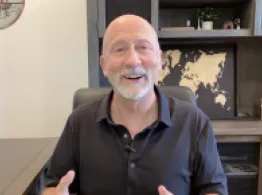
ETF.com’s Dave Nadig had a chance to sit down with Rob Arnott, Founder and Chair of Research Affiliates, at the Schwab IMPACT 2025 Conference. The two discussed the mechanics of how the major benchmark indices add securities, the lag and missed opportunities that occur between when a company is announced for inclusion and when it is actually added, and the AI bubble. Below is the transcript of their conversation.
Full Transcript
Dave Nadig: Rob Arnott, Research Affiliates, thank you for joining us. I'm going to get right to the heart of the matter. You've got an article or a monograph coming out with the CFA Society, where I published the book that I wrote on ETFs. A lot of respect for that organization. In it, you dig into what I think we both probably thought was a much more researched topic than it is, which is how stuff gets in and out of indexes and then what happens in that process. Tell me a little bit about some of the surprises you found in that research.
Rob Arnott: Well, a lot of this stems from our original research on fundamental index where we realized that with conventional cap weighting, if a stock is frothy and expensive and doesn't eventually live up to its expectations, you're going to have too much in it because you're linking the weight to the price. And so you're automatically going to be invested mostly in overpriced stocks and too little in underpriced stocks because the weight is tied to the price. And so with fundamental index, we said, what about using fundamentals to weight the stocks, contra-trade against extremes, contra-trade against the market's most extravagant bets? And that creates a stark value tilt.
We also thought at the time, why would you choose stocks on market cap? Why not choose them on fundamentals? That's been a gift that keeps on giving. The notion of fundamental index can be applied also to cap-weighted indexing. And so we've done a ton of research on how stocks get into and out of indexes. Basically, with Russell it's a rule, with S&P it's a committee, but the ultimate biggest deciding factor is the market cap.
Dave Nadig: Right, because some companies just get bigger and they grow into the bottom of the S&P 500 or the bottom of the Russell 1000.
Rob Arnott: Price grows them into it. Not necessarily the fundamentals. And so indexes are thought to be passive. They mostly are. But if there's 5% annual turnover, then a more accurate way to think of them is 95% passive, 5% active. What's that 5% active look like? I like to joke that it looks like Cathy Wood on steroids. It's buying frothy growth names at extravagant multiples when a company is little and its market cap is big.
"You're Buying High, Selling Low"
Dave Nadig: Right, so they've grown, sort of frothed themselves out of mid-caps, they've exhausted the hype cycle of the mid-cap market, and then they show up as the smallest player in the large-cap market.
Rob Arnott: Or even not smallest player by market cap, but definitely still a small company, a small business. Those replace typically now reasonably large businesses that have fallen out of favor and are dirt cheap. And one of the fascinating things is that roughly half of the stocks that are added to S&P or Russell are gone within ten years.
Dave Nadig: They just flush right out the bottom again.
Rob Arnott: Right. So you're buying high, selling low. The average stock added to the Russell, for instance, outperformed the market by 7,500 basis points in the year before it was added. The index didn't get that. That in fact was the proximate reason it got added. Then the ones that turn out to be flip-flops, turn out to be a mistake, are dropped, like I said, over half are dropped within ten years, are dropped at a loss of over 7,000 basis points relative to the market. If you beat the market by 7,500 and lose by 7,000, you're not back where you started. You're down 50%.
Dave Nadig: So let's tease out some of the impacts here because some of the early work that was done here was really around trading implications, right? Because everybody wants to trade the Russell rebalance, talking about 3-, 5-, 10-, 12-day windows. You're talking about the long term. You're talking about a stock ends up in the S&P 500, it's already accumulated its real performance gains, it's now headed for a year of underperformance. That's basically what the research says, right?
Rob Arnott: Right. Now, the year of underperformance, it's in the index, all of the stocks that are in the index are members of the index by definition. And so on average once it's in the index it doesn't underperform by much. It gives back a little bit of ground and then becomes a market performer on average by definition. But if it's a flip-flop, it comes in and goes out at a huge loss.
Now, can you avoid those? Can you say, "Oh, Rivian's not going anywhere, let's not add it?" You can't do that with any reliability. What you can do is wait for the underlying fundamentals to validate the price move. You say, "I'm not going to add a stock just because it's in the top 500 or top 1,000 by market cap, I'm going to add a stock when it's in the top 500 or top 1,000 by fundamental economic footprint. How big is the business?" And that simple change will still make mistakes, but the mistakes won't be costly because you're not buying because the price soared.
How the Bottom Stocks Are Impacted
Dave Nadig: Does that also change the turnover down at the bottom of the food chain?
Rob Arnott: It lowers the turnover modestly. But not a lot. Lowers the turnover by 15 to 20%. And it eliminates most of the flip-flops.
Dave Nadig: That makes sense, right? Because you smooth that out.
Rob Arnott: Right. Most of the flip-flops are a function of a company soaring, being beloved and thought to own the world in the future, and then, "Oh gosh that didn't work out," and then getting kicked back out. If you wait till the company's big enough to matter, you'll be buying the next Nvidia or Tesla late, but you'll also be missing the next Rivian or Pets.com.
And buying the next Nvidia late doesn't necessarily mean you're buying at a higher price than the index did because it bought it when it was frothy and then the market waits to see is it validated by the fundamentals? The fundamentals validate it, we buy often at a similar price. So you don't lose much even on the winners by being patient. And indexes are not patient. When a stock soars, oop, got to add it.
Dave Nadig: Well you've got a couple of products, and I don't want to turn this into a pitch, but you guys do have a couple of products that I know you sort of put your money where your mouth is on these in both angles, right? You've got NIXT, which is taking folks that have fallen off the bottom, who tend over the long term to overperform versus expectations. And you've got RAUS, which implements some of this at the sort of 500 level. Tell me a little bit more about that methodology.
Rob Arnott: Sure. With RAUS you basically wait until a company's economic footprint puts it in the top 86% of the US economy. 86% of the US economy is about 500 businesses. So you choose the 86% biggest businesses and then you say we're going to cap-weight this because the market's cap-weighted and if you want a market tracker fund, you have to be cap-weighted.
Dave Nadig: Equal weighting is not going to do it for you.
Rob Arnott: No. But if you use fundamental selection and cap weighting, you wind up with the best of both worlds. You wind up with the market participation just choosing the stocks in a different way.
Dave Nadig: So that's the important distinction. So the weighting is still the same way the S&P 500 and everybody else is weighted, the way a stock gets into this fund, into the index behind this fund, is through this sort of fundamental selection and seasoning process.
Rob Arnott: Right. So the indexers will say you have tracking error.
Dave Nadig: Which I'm sure you do.
Rob Arnott: Which we do. Right. And therefore you're active. No. You have turnover, I have less turnover. Your turnover is active, frothy active. My turnover is more economy-centric, market-like.
Dave Nadig: And I'm guessing you don't have a committee either.
Rob Arnott: I don't have a committee. And the index has been live for four years. Globally it's added 120 basis points per annum relative to MSCI ACWI, and that's with only 0.9% tracking error. That's less than the tracking error between ACWI and the FTSE All-World. So if those are both indexes, this is an index too. It's just using a different method for choosing what stocks to include.
The Real Costs At the Top
Dave Nadig: So I love this idea of figuring out how to solve the bottom of the index problem, which is one that we've talked about for 35 years. It is a real issue. At the same time, there's increasingly research which again you talk about in the monograph about the impact at the top end of the food chain. The Mag 7, the giant mega caps, the trillion dollar companies, and the impact that them being the index darlings has on markets and on price movement.
And there is increasingly evidence that in fact because of market inelasticities there is a winner-take-all component where you end up with some runaway winners and potentially runaway losers when flows turn. How do we think about merging those together? Because again it's not that we're saying, "Don't index." We're not saying, "Don't invest in the market." None of this is a bear market call, this is about the nuances about how indexing is affecting markets. What are your thoughts about that top end of the cap table?
Rob Arnott: So the top end of the cap table, one section of that monograph, and I think it's probably coming out in the next three to four months with CFA Institute Research Foundation, one section of it is called Membership Has Its Privileges. So with apologies to Amex for stealing their tagline, membership in an index has two big privileges. One, getting into an index means you have an automatic pool of buyers. The mere act of adding it to the index pushes up the price. Between the time it became obvious that Tesla had to be added to the S&P and the actual decision to implement it was about seven or eight months, and during that seven or eight months it rose over 150%. Fabulous. That's a privilege.
Dave Nadig: If you were in Tesla, yeah.
Rob Arnott: Yeah, fabulous, that's a privilege. You have the privilege of sporting a larger valuation multiple. You also have a privilege of automatic buyers in huge quantities because of the flood of money coming into index funds. And that pushes up the gap in price between members and non-members.
So here's what's fascinating. The relative valuation of members of the Russell 1,000 and non-members was roughly parity 30 years ago. It's one and a half to one now. If you're in the Russell 1,000, your average market valuation is two and a half times that of the non-members. The indexers will say, "Yeah, these are great companies, these aren't. These are crummy little companies, these are great companies, they got added because they're great companies, and market price action validated that."
Okay, if they're better companies, they must have better growth. Earnings and dividends for non-members of the Russell 1,000 over the last 30 years have grown 1 to 2% faster than the members. And that continues in the last 10 years.
Dave Nadig: Despite the price movement at the top of the food chain being the opposite, right?
Rob Arnott: So if you're paying two and a half times as much for companies with 1 to 2% slower growth, that strikes me as a bit naive.
Dave Nadig: That's an anomaly we would call it.
Rob Arnott: And it all feeds into the other strategy you mentioned, the deletions. The deletions are no longer members, they're part of this cohort. And if this cohort has faster growth and is trading at 40% the valuation multiple, it will have higher returns. But we're also in one of the probably the largest business in the global macroeconomy, where people hate bargains. Where people want to buy something that's gone up in price.
And deletions, this has been since ETF Architect launched the NIXT ETF, it's been a disappointing year for non-members because of that surge. And so they're better bargains than they were before, but getting people to pull the trigger and buy something that's cheap is really hard in this business.
Market Clearing Prices Are Headed for Two Extremes
Dave Nadig: Well and some of this is self-enforcing, right? I mean you talked about membership versus non-membership, but the recent work from guys like Bouchard or Gabaix and Koijen would suggest that even within the S&P 500, the top stock and the bottom stock, their gap is going to widen just because of flow. Because of the inelasticity of those big names at the top. There's no substitute for NVIDIA in a portfolio, therefore nobody substitutes NVIDIA in a portfolio.
Rob Arnott: Exactly right. Yeah, you and I were talking before we got started on this about Mike Green.
Dave Nadig: Mike Green at Simplify, right.
Rob Arnott: And he's done some really awesome work in this area. He has an alarmist view of how this all ultimately implodes, and I don't share the sense of alarmism but I don't deny that he could be right. And I differ with him not on how it breaks, but on when it breaks. He's saying the next handful of years, I think the next 15 or 20 years. But it's going to break.
Dave Nadig: Yeah, I agree. I think timing any kind of market timing is always a bit of a fool's errand. I think the issue is when would you expect flows to invert? And my argument has been I agree, I think he's a little bit alarmist. My argument has been honestly if you're waiting for the baby boomer money to be the problem, you've got it backwards because baby boomers are the ones who are in too many bonds right now.
And when they hand that money down to their kids, guess what, they're going to want risk. They're not going to go into more bonds, they're not going to sell the cash, they're going to buy the S&P 500. So it's hard for me to see the great unwind happening there barring cataclysmic economic activity.
Rob Arnott: Here's a fun thought experiment. Indexing is half of market cap in the US. Indexing has turnover of let's say 5%. So that means 2.5 comes out of the index community and into the active management community and 2.5 goes the other way. Take it forward 10 years, it's 80% indexed. Now 4% goes into the index out of the active group and 4% back the other way. Active managers with 20% of the market are going to be forced to sell 20% of their holdings every year to an index and those are the beloved holdings that they don't want to sell. They're not going to sell them unless the price is extravagant. And they're forced to buy 20% stocks that are crummy that they don't want to own.
Dave Nadig: It's going to drive them down.
Rob Arnott: So the market clearing price eventually moves towards infinity and zero. That's where it breaks.
Dave Nadig: And that's when you would expect things like big active managers to come to the fore with massive five-year track records crushing all comers. We haven't really seen that yet. We certainly have had a handful of active managers who've been quite successful over the last four or five years in their corners of the market. Whether it's Cathy Wood when she was on the run up or Tom Lee is having a great year now, but there does seem to be this inevitability to the flows coming into passive.
Rob Arnott: It is absolutely inevitable on a five-year horizon.
The Chasm Between AI Utility and Market Enthusiasm
Dave Nadig: All right, before I let you go, I'd be remiss not to ask one of the smartest people I know in this business what your take on "the AI bubble" is. You and I have talked about markets for decades here. What's your vibe check?
Rob Arnott: My take on it is extremely simple. AI is the real deal, it is extraordinarily powerful. ChatGPT 3.5 was about as smart as a high school kid with a bad habit of making things up. GPT 5 is about as smart as a university professor with an occasional habit of making things up.
Dave Nadig: Now are you using it in your research work, either on the quant side or on the writing side?
Rob Arnott: The writing side more than the quant side. And no I don't let ChatGPT write my papers.
Dave Nadig: I wouldn't have thought so. I think I would have caught it.
Rob Arnott: ChatGPT is an awesome referee for a paper. It'll tell you what's wrong with the paper.
Dave Nadig: That's how I use it too.
Rob Arnott: It'll tell you what citations you missed, you have to check the citations because it occasionally makes them up. It's an awesome tool for proofing a paper. It won't come up with ideas for you. And that's where it falls short. But this is in two and a half years. It's gone from high school student to professor. It'll be Nobel laureate in another two years.
Dave Nadig: So you're a believer on the use cases. Are you a believer on the asset management part?
Rob Arnott: No. I think this is a bubble. In a healthy capital economy, you have to have happy customers. That's the essential element. That's, capitalists miss that argument when they argue with socialists. "You're cruel, you're heartless, you fire people." "Yeah, but we provide what people want. And if we don't provide what people want, that's when we go out of business and we should go out of business."
Now, that essential element is happening in AI, but who's got the happy customers who are thrilled to pay what the product costs? Nvidia's customers line up for the right to get on a waiting list to buy super expensive super chips. How cool is that? They have very happy customers. They're priced accordingly. Their customers are having a hell of a time finding a profit angle. And that'll happen, but it's happening way slower than the advocates suggested and embrace of AI is happening way slower than the advocates suggested. Same thing as the dot-com bubble.
The ten most valuable tech stocks in the world in the year 2000, ten out of ten failed to beat the S&P the next 15 years. You had to wait 18 years for Microsoft.
Dave Nadig: So it sounds like you're in the camp of short term overhyped, long term maybe underhyped.
Rob Arnott: I think that's a good way to describe it. On a 20-year horizon it's going to change things more than we can imagine. On a five-year horizon, not so much.
Dave Nadig: Rob, thank you so much. Absolute pleasure.
Rob Arnott: Thank you.
Dave Nadig: Cheers.
Discover the news, data, and voices shaping the ETF community. Follow along here.