Meb Faber @ Future Proof: International Investing Spotlight
Dave Nadig chats the turnaround in international investing with Cambria’s Meb Faber.
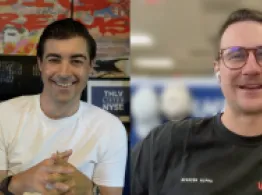
Dave Nadig of ETF.com chats the turnaround in international investing and how investors should think about allocations with Meb Faber, co-founder and CEO of Cambria.
Meb Faber & Dave Nadig Conversation - Full Transcript
Opening: International Stocks Turn a Corner
Faber: This is as good as it gets. U.S. stock market's up like 10% this year. But lost in that, underneath the waves, foreign stocks have made the turn. And not just the foreign indices, which are up 20, 25% this year – the value trade, which everyone talks about in the U.S. they say "value's not working, value's not working”.
The Sentiment Shift Underway for International Investing
Nadig: I'm here with Meb Faber, CEO of Cambria. Meb, you run some of the most interesting funds that I see on the street around international investing. International investing got a bad rap for most of the last, I don't know, 10 years. We seem to be in a bit of a turnaround. What's the vibe check there?
Faber: Can I say something without everyone getting mad? Look, we're at an all-time high in the U.S. stock market. Everyone's fat and happy. We're at this beautiful conference, everyone's in a good mood. This is as good as it gets. U.S. stock market's up like 10% this year.
But lost in that, underneath the waves, out here in the Pacific Ocean, very quietly, foreign stocks have made the turn. And not just the foreign indices, which are up 20, 25% this year. The value trade, which everyone talks about in the U.S. they say "value's not working, value's not working," the deep value globally – we have a fund that does this, GVAL – is up well over 40%.
Nadig: Jeez!
Faber: And so, you have this rebound, but if you talk to most people here, they may be talking about Nvidia, they might be talking about gold or Bitcoin, but you don't hear the sentiment shift yet of people. But as they start to have their meetings – and by the way, this fund, if you look it up probably by the end of this month, and things can change obviously, it's going to be beating the S&P on one, three, five years, which I think people would really surprise them.
They say the S&P has just crushed it, 15% a year for a decade, that's a 10-bagger. But there's been a sentiment shift, and I just think it hasn't, once people start opening their account balances at year end, it's going to shift from clients talking to their advisors and saying, "Why do we own emerging markets? Are you crazy? We own foreign stocks," to all of a sudden being like, "Why don't we own emerging markets and foreign stocks? Like, what's going on?"
Not Just a Flash in the Pan
Nadig: So, Eric Balchunas at Bloomberg and I have had this running argument on Twitter about the "Sell America" trade. Which, yes, there was a lot of media of like, "Oh, everything's going to hell in a handbasket in April," which all turned out to be a bit of a head fake. But at the same time, I keep pointing out to him, you did leave 15, 20% on the table if you just stayed in the U.S. How much of this is a reset that happened in currency and trade expectations, and how much of this do you think is systemic and is going to lead to this kind of continued outperformance in international value?
Faber: There's been a big move in the dollar down this year. And I always love talking to advisors and they say, "Well, yeah, part of this performance is the U.S. dollar going down." I'm like, "Well, at the same time, were you claiming that for the past 10 years when the U.S. dollar was going up?" It works both ways. And currencies, over time, real currency returns are stable. Any given year they move all over the place.
But the big kicker that I don't think people understand, in my mind, you cannot argue that the U.S. stock market on any valuation metric is near, above, or at the highest it's ever been in history. And so, you have this weight. It doesn't mean that it can't keep going up. It doesn't mean that it has to crash. Foreign stocks, emerging market and the cheapest of the cheap is vastly cheaper because of that underperformance the past, not just 10, 15 years.
And so, the P/E ratios, 10-year CAPE ratios on the cheap bucket is like 12, and there's a whole bunch of countries that are single digits. But most of the world is in the mid-teens, low 20s, totally reasonably priced. U.S. is knocking on 40, which if we remember, the final boss, the only one that's left, is December '99. You remember these times when it hit 44. And so, we think this could be not just a shift for a few months, a few quarters, a few years, it could last a better part of a decade or more.
What Investors Get Wrong About International Investing
Nadig: How are investors getting that allocation wrong? Because most advisors that I talk to, when they're going to grab a little international off the shelf, they're grabbing the cheapest index they can and just assuming that's going to get them what they need. Obviously, you would disagree with that. What is it that you're bringing to the party that the cheapest of the cheap beta isn't bringing?
Faber: I don't actually disagree with that. I'm happy if they do that because it moves—they're moving off zero. And if you look at, you know, U.S. as a percentage of world GDP is only 25%. Of market cap, it's two-thirds. But if you talk to most advisors, they have a rounding error of foreign, and they almost never have any emerging. So they may have a few percent, 5%, 10%.
The default starting point, valuation agnostic, should be a third. And then if you say, "Well, look, I'm actually paying attention to valuations," and the value and quality in the U.S. is actually quite a bit better than the market cap, so we love shareholder yield. And people always say to me, "Meb, but in foreign and emerging, I can't trust what they're doing." I said, "Well, this is shareholder yield is a great metric because it includes dividends and buybacks." And usually, if you got a CEO that's, you know, doing something shady, what they're not doing is returning 10% of their market cap a year in cash flow to the investors.
And so, you get these high-quality businesses trading at really low valuations. But I'm okay if people just move off zero. They can buy Vanguard, we love those guys, but we do think that there's better choices than market-cap weighted all around the world.
Nadig: All right, well, it's been great catching up, Meb. Thanks so much.
Faber: As well, buddy.