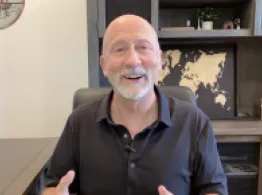
Pictet’s David Wright: It’s Not an AI Black Box—It’s a Forest
David Wright, head of Quantitative Investments at Pictet, shares how the firm uses AI in some of its ETF strategies and how its fundamentally different from LLMs.

Pictet's Head of Quantitative Investments, David Wright, sat down with Dave Nadig, President & Director of Research at ETF.com, at Future Proof Citywide earlier this month to dig into how the firm uses AI in some of its strategies. The following is a transcript of their conversation.
Bringing Machine Learning to Quant Investing
Nadig: I am very excited to be joined by David Wright, who's the head of Quant at Pictet. We're going to skip a bunch of the stuff we normally do in an interview, because I've got too many questions and not enough time. But Pictet, if you don't know them, has been around almost as long as we've been a country. 220 something years at this point, 800 billion or even a trillion yet.
Wright: Probably closer to a trillion at this point.
Nadig: Yeah, it's just ridiculous amounts of money and about 4 billion of that is in AI related quant stuff, right? Okay. And you're the guy running most of that business, right?
Wright: Correct.
Nadig: Okay. And what you do in terms of AI is a little different than what everybody thinks about AI. You're doing what I think some people think of as more old school AI in terms of machine learning.
How is that now different? Because it's not just that we've got more compute. There have been like real advances in the science of machine learning in the last decade.
Wright: There have. Yeah. I mean, I like that you frame it immediately that way and we can get right into it. Because when you talk about running an AI strategy these days, the expectation is that you've got a large language model, and that clearly is not what it is. So you're quite right. What we're using is machine learning.
We're using techniques that are based around decision trees, thousands and thousands of decision trees. And the advances that you talk about is that while a lot of the math, a lot of the theory around this, has been improving over decades and goes right back to the 1950s, a lot of the advances in how you can efficiently train decision trees has really advanced over the last ten years.
And actually, around ten years ago, a program called LightGBM came out that actually came out from Microsoft. And it's something like that that allows us to start and then build what becomes a proprietary model.
Nadig: Yeah, I think a lot of people think that the AI revolution started with ChatGPT, when in fact there have been some just monumental leaps forward here, combined with the kind of compute that now comes online because of the demand on the LLM side. And you take this and you apply it to like hundreds, thousands of factors—you don't call them factors, they’re features, right?
Wright: It depends how jargony we want to go here. It's like, so we were just talking about this. So I came out BGI when the characteristics we were assessing about companies were features. I’m sorry, they were factors, then they became signals. Once you're into the machine learning world, the jargon is features. But essentially we mean the same thing. We want to assess characteristics of companies.
Nadig: And so some of those are fundamental things we'd all know: price -o-earnings ratio, all the stuff we get out of a 10-K. Some of it's things like the day of the year in the calendar and opex. But some of it's also a little squishy, right? So like how far out into data we might not think of does the feature set go?
Wright: We've tried to keep it still reasonably sensible in terms of what that feature set.
Nadig: So no hemlines.
A Combined Approach Offers Alpha Potential
Wright: At this point. I mean, I—there are large parts of the quant industry that have gone very heavy into the alternative data. You know, like the satellite imagery, the smartphone locations. And, you know, for every one of those hundred stories that I could give you on those types of things, there's probably one generating alpha.
So we do look at quite a lot of qualitative information at companies. You know, length of tenure of the CEO, turnover in terms of the employees. But it's not out there. What it doesn't have to be is that every feature that we use would independently work on their own to generate alpha.
I think that's one of the big advances that we make with machine learning. Maybe 80 to 90% of the features that we use would work and generate some alpha in a traditional construction. But a lot of the things that we add into the training and the machine learning, they wouldn't necessarily work on their own.
Nadig: Is some of this just signal degradation over time naturally happening? Like something like I'll make something up. But like price-to-earnings is perfectly predictive, and then it just declines over time as everybody tries to use it. Is the secret sauce that you figured out, like, hey, even when this is sort of not great, you combine it with 4 or 5 other things and you’ve got gold?
Wright: Yeah, I think that's a pretty good description. Maybe not one I can better at this point, but maybe, maybe I put a kind of little bit more detail around the example that I like to use is sort of traditional analyst sentiment type signals. So let's take a very basic one, the ratio of upgrades to downgrades. That, the academic literature written on that was probably the ‘90s.
We were trading—well in my previous firm at BGI in the 2000s—on those types of things. And exactly. You're right. These types of signals degraded over time as more and more people were using them. But I'd make two points. The first one is degradations on a lot of these signals, even in traditional constructions, have been surprising.
They've not been a straight line. They've kind of had peaks where it looks like people…
Nadig: They rebounded.
Wright: Exactly. People have moved away from using them, and there suddenly seem to be a bit more alpha in it, or it's still working in some regions, not others. But what machine learning has very much given us is we can take a traditional signal like that, and we can learn from the data to condition it with many other of these features, which highlights when you should use it. And we don't see the degradation in anything like the same way.
Digging Into the Methodology
Nadig: For somebody who's not a machine learning expert, but who's done a lot of work with LLMs, is this somewhat equivalent to the idea of retraining an LLM on new data, like how often are you sort of revving your frontier model, as it were?
Wright: So certainly it has the commonality that we want to retrain it, and we want to give it as much relevant information as possible. But it is a very different approach. So, we retrain every three months. We train our models on 15 years of our feature data as inputs. We train to try and forecast like…
Nadig: A couple hundred?
Wright: It's about 400 at the moment. And, that will grow and that will grow quite aggressively because, again, the advantage of using machine learning, or one of the advantages? We're not capped by the sort of total size that we can use. So we do retrain every three months. That allows us the relationships, the misunderstood, interpretable patterns between these different data—we can pick up on new things if we retrain the model regularly.
Nadig: All right. I'm going to do a hard shift there. So you're talking about finding signal that you haven't seen before by comparing different features. So analyst settlement and analyst settlement time, maybe another feature or two. And you say “Aha, now we've got real signal.” How do you trust that, because one of the challenges I mean you guys launched a new fund recently PQUS I think?
Nadig: PQNT is international version which you launched first. And in the press release you said it's not a black box strategy, which is exactly what everybody who's got an AI strategy says. So why isn't this a black box strategy? Sorry.
Wright: Okay. It's a fair question. So firstly, the type of machine learning and the approach that we use. So you've talked a lot about LLMs at the moment, and we can come back to whether an LLM would be any help at all in this. And it isn't. But LLMs are trained using deep learning, generally neural networks that learn we think how the human brain learns.
The approach that we're using—again, tree-based—these trees are trained sequentially. So we, build a tree that is, maybe produces an okay prediction, but we can understand where its limitations are. And then we build a second tree that looks to improve for those limitations.
So, but a big advantage of using a tree-based approach is it's interpretable. So we actually have one of the researchers in a team. Her full time role is building tools that can allow us to go back up those trees and understand which of these features are most relevant for the view that we're taking on a stock, and understand how these features are working together to bring that view as well.
Nadig: Is there, you know, my limited understanding of quant from 400 years ago, one of the issues always faced is, well, is this signal actually just a duplicate of this other signal? Is there any actual new information in it? Or you can imagine like earnings and revenue, right. You have to really tease those apart and find out what's different between them. Are you able to do that through this sort of going back up the tree analysis?
Wright: So it definitely involves a different philosophy than when you're running a more traditional quant approach. And there is an acceptance of what you get from the data in a way that we wouldn't have thought when we were running more traditional factor models. So what do I mean by that? Well, the power of this model, again, is—and you're sort of highlighting it well—is that we find relationships, pairs of these features that work together or maybe tens or 20 features, different pathways in the trees.
These are the conditioning elements. And again we find hundreds of thousands of these. Now let’s go back to a previous part of your question; we get comfort from the fact that these will continue to work, because we've identified that we can see these patterns in different markets in very different time periods.
But when we actually look at them, if we listed them, if you and I looked at these groupings, it's going to take us a long while. But if we looked at it, you and I could make a story on probably 20% of those groupings, and 80% of them have no sort of causal obvious reason why they're clustering together. But again, we can identify them in different markets and different times. So that does give us a lot of confidence in using them.
Nadig: Can you come up with some examples of that? Because that's got to be the part where people say, well then that's your black box, right? But again, the idea that you're seeing the same thing, say in the European market as you are in the U.S. market for two signals that don't make sense together, that's really intriguing.
Do you have any examples of things that seem nonsensical but just seem to be repeatedly working?
Wright: The problem is, the best stories are the ones that have the causal reason on it. So again, our answer on that is like 80% of them. Again, we're talking, you can almost take any combination of these in some respects. And I can suggest there's an example where we see this and that. So no, it's I wouldn't say anything like shocks us in what you see there, but there's just not the obvious causal reason that you would have in like how analyst data interacts with the calendar, for example.
The Importance of Windows
Nadig: Got it. Okay. So let's shift gears here a little bit to the actual implementation of this. We've talked a lot about how you're looking at all the data to say pick this stock, not that stock. But importantly you're not picking a ten year portfolio. Right. Your window is fairly short.
Wright: Yeah. Correct. So the model is forecasting the next 20-day. And a key point is that we're training the model to forecast the specific part of a return. So if you look at the next 20 days there's going to be some market beta in it. There's going to be some sector beta. There's going to be some country betas. There's going to be some style betas.
We don't want to learn that. We just want to teach it to forecast the residual piece. So once we've trained a 20-day model, when we put that into our portfolio construction, we then slow it down. We'd be doing crazy amounts of turnover. That is not going to work in a lot of vehicles. And would particularly not work in an ETF. But we can still get great active return, great alpha from the strategy by slowing that forecast down in the portfolio construction by a factor of about 3 or 4.
Nadig: What does that mean, practically speaking, in terms of turnover and when something goes in and out based on the model signals.
Wright: So we run the model every single day. So we have a fresh view on the next 20 days for each stock. But in practice the daily move, the correlation between the model one day to the next is like 0.97. Once we get a week's changes, the asset sizethat we’re at the moment, it's worth rebalancing. So we rebalance the portfolio.
In the U.S., we might hold 150 names in. EAFE we might hold 250 names, we might trade 40 or 50 of them on a given week, but small incremental amounts. So annual turnover in the strategy is about 150 one-way.
Nadig: Okay, so that's less than I honestly thought because based on this, I was thinking, “Oh, we got 400, 500% going on here.”
Wright: If you want to, if there's something that you want us to work with, we can get one that rips as well. Dave, we could do thousands of turnover.
Building Human Constraints Around the Signals
Nadig: Well, I mean, that's an interesting question. The nature of signal must be different, right? In a sense, what you're saying is you built a 20-day crystal ball, right? You've got a view for 20 days, and then you use that to create a portfolio. You're actually not churning completely every 20 days. Is how much do you have to, I mean, you say you slow it down by a factor of three. How? Is that scale based on the vigorousness of the signal?
Wright: Yeah. So I saw you snuck in the crystal ball versus the black box here. So that is the line that we've tried to go with. Yeah. So we again we, we have our model. We have some interpretability on that model. We know on a given day why every position is viewed as it is by the model.
We then feed that into an optimization. So here we want to set a risk penalty. So essentially to try and get us to our 2% tracking error around the benchmark, whether it's S&P 500, whether it's whether it's MSCI EAFE. We then have a risk understanding of all of the stocks. So what they provide us in terms of like again beta, common risks, style exposures.
And we make sure that on those dimensions that we don't deviate almost anything from the benchmark. We keep those things very, very tight. And then there is a turnover penalty. So what that's essentially saying is that you have to have a stronger view than if you weren't penalizing it to take the position.
Nadig: So you have to put that constraint on it.
Wright: Exactly. So those constraints are defined by the portfolio managers. So again, something that we try and make very clear in this strategy is it's automated. So it's an automated model. It's an automated portfolio construction. But it's not autonomous. Whether it's the training of the model that's very supervised in the parameters by the PMs or then the portfolio construction, the guardrails are defined by them.
Nadig: Is there a chance, or has there been the experience of getting signal from the model that you that the humans in the loop here feel is spurious and either saying, “Maybe we need to pause and retrain?” Or conversely, do things happen in the signal space, i.e. the, you know, oil goes 120 for a minute and a half that you have to say, “Okay, we need to pause and reset the model.”
Wright: So if… potentially. Which is a terrible answer. I appreciate that. If you have a huge regime changing event like a GFC, like a start of COVID, given that we have a 15 year look back, we've discussed this a lot in the team. I think potentially training some shorter term models and ensembling them in, combining them in to get a bit of a stronger recent term understanding is maybe something that we would think about.
But in practice on the more sort of like day to day and specific position or individual signal view level, the PM should not have any discretion over those things. They're providing additional risk guardrails. They're checking for potential news that the model might not be aware of in the data set that it's got from the day before, but they don't have any discretion beyond that.
Nadig: Well, let's I don't mean to beat this up to death, but let's talk about that narrow case. But the model said, I'm going to make something up. I don't even know what you own. Any of these stocks, the model said, “Be long Exxon in the morning.” Something crazy happens. Does the PM not have any input on like, “Well, maybe tomorrow we should either buy more or sell.”
Wright: So they don't have any way that they can force an additional alpha view on that. Like even if they're saying, “I've done huge analysis on the energy market and what it means for Exxon”, well, my initial response will be, “That isn't your job. I mean, your job is to continue to refine a quant model and build that and make that more robust.”
But we also do have dashboards of news that flashes up for them. So a bit of a terrible example, but I was with the team in New York where our U.S.-based sales team is based towards the end of 2024. I was out running in the morning. I ran back through Manhattan and the senior guy at United Health had been assassinated.
And later that day, we had a trade in the portfolio that we would want to buy UnitedHealth because it's based on data from the day before. Clearly that stock price is going to move on that news. So we removed that trade from the portfolio, if that—or from the trade list. If that imbalances the portfolio, we’ll rerun the optimization with a constraint on taking any risk there. And then the next day when prices come in, when analyst views come in, when some news come in, that's what 's going to change the view on United Health.
Nadig: So that process of looking at the news, understanding what's important and understanding whether to pull that trigger and effectively override a trade. That's a very human process still. So how do you develop this combined trust model of you've got a bunch of people who are predominantly quants that you've learned to trust…
Wright: Our quants are real people as well there, Dave.
Building Teams and Methodologies on Trust
Nadig: Yes, I understand. I consider, I used to consider myself one, but you've got that stack of trust, and then you've got the model itself that you need to learn to trust. We talked a little bit about some of the sort of repetitiveness in different markets, different regimes being how you trust the model. How do you learn to trust those people?
Wright: So one of the ways that I get that trust and, you know, firms that use machine learning, and again, I think most of the people very focused on this space are the high frequency hedge fund traders. So they have to come at this a little different. Everything for them is just about trusting the data. Again, they would run these things pretty much autonomously.
With an approach like ours, weekly rebalancing, maybe we go a bit more frequently. We do have these potential stopping points. So how do I get the trust there? Well, a big thing for me is that the individuals that wrote the original academic research that trained the models that refine the models are the portfolio managers as well. So it's a very joined up process.
But I think it's also something that I would have to accept that being a quant PM is potentially a slightly different skill set than being a great machine learning expert. But thankfully, the two people that I have running this back in Geneva and other researchers and PMs that work in the team, I think we found that combined skill set.
Nadig: How do you maintain that, though? And maybe let me frame this in a different way. Not everything always works. So some point in your head, whether it's happened or not, at some point you're going to have trades that fail miserably because that's just, you know, even the best tennis players only win 53% of the time, right? So how do you deal with failure in this environment?
Wright: So, I think we have to make sure that the model keeps learning and we keep learning as an investment team as well. So I think a pretty good example is something that's happened recently. We try and I've sort of described how we do it a little bit in the training. And then in the portfolio construction, we try and neutralize as many economic risks as possible.
And clearly a big risk that's been going on in the last 12 to 18 months has been the broader AI trade. However, we define it in terms of risk terms or baskets from the sell side, we look like we were neutral to that trade, and then we lost money in the first six weeks of the year. And we found that even though we weren't taking sector views and we didn't have an obvious AI, bet, we, the model had learned to favor some of these asset-lite companies within industries and dislike their asset-heavy peers.
And this was a trade that rolled over very heavily, as I'm sure many of you know. So what do we now do? Well, that's now a risk factor that we can train the model on and that we can constrain the portfolio. And again, it was a combination of the portfolio managers doing a more traditional analysis of what happened to the portfolio and some of the tools that we have analyzing our model that got us to that.
And while that has become a very sort of popular thing to talk about now, we were probably two weeks ahead of that before it was mentioned in any broker note or anything, any news article. We had realized that that risk existed, but sadly we didn't realize it before the event.
Nadig: Well, I mean, you can only work with the information you have, but that feels like a real difference in sort of category slotting for your approach versus other ways you might get access to U.S. equity. I think people are used to thinking about like, “Okay, well, I've got international diversification.”
I don't think people are used to thinking about time diversification in their equity positions. What I'm hearing from you sounds a little bit like you guys have a process that keeps you at the front end of understanding how markets are working versus, say, a traditional active management shop with a bunch of advisors might be great at that, but they're sort of working from an ethos, from a thesis about how markets work and hoping that they're right.
You guys are kind of reinventing the thesis every other day. Is that an appropriate way to think about it?
Wright: I think that's fair. And again, to your first point, that what we are trying exactly to do is deliver an active return that is uncorrelated exactly to what they're doing. So the power of what we've been able to build here is it's not just that it's uncorrelated to, you know, your traditional stock picking approach, but it's uncorrelated to a lot of the quants out there who do still take that more traditional factor approach.
They're going to have momentum. They're going to have value. They might have quality. Now they might be using some machine learning to define some of those things, but they won't be focusing in building it truly factor neutral and truly diversifying in the way that we have been.
Maintaining Edge in an Increasingly Competitive Category
Nadig: So we only have a minute or two here left. How do you keep this edge like you've clearly had some there performance? I mean, everyone can go look at your numbers globally and for your recent funds. I'm not going to do that here. But like, the stuff you're doing seems to be working for the most part. How long can you keep that edge when everybody else has got access to frontier models and, you know, subsidized compute by the private equity industry and all that.
Wright: I mean, so firstly, I think a bit of a head start is clearly helpful here. Again, I come back to the point I made that the vast majority, if we look at the hiring or talking to data providers who give you an idea who they're working with or understanding who's out there buying GPUs, and, you know, the spend is still predominantly in the much higher frequency end of the market.
So there might be plenty of people here who are hearing 20-day, and that sounds pretty quick, but a lot of the machine learning is going on intraday. Now of course I'm not naive—lived through quantum crises before where people have ended up doing a lot of the same things. So it does come back to the kind of things that we learned there.
We've got to keep hiring people who have some slightly different views, even if they come with a sort of machine learning background, they have a slightly different view how we might do it. It's more data, it's more compute efficiency, it's innovating. It's constantly thinking about new ideas.
Nadig: So you're just going to be running ahead of the head of the field over and over and over again as long as you can.
Wright: So even if there are people chasing, we want to make sure that we stay ahead.
Nadig: All right, so I know I went to your website. I've read like you've got great white papers there outside of the stuff that's available to Pictet for nerds like me, where should I be reading? Who should I be following that's at the front end of some of this academic work, some of this thinking on how markets work.
Wright: I mean, a foundational book is sort of like is the Theory of Statistical Learning. Again, it's been updated recently. It depends how much you want to dig into this one though, Dave, I think the level that probably you're interested in on this is the type of white papers that we're talking about here.
We still publish a little bit. I don't let the team publish too much, because I don't want us giving away the value that we're able to offer our clients. But we do give some summaries of the types of things that we're working on on our website.
Nadig: All right. Well, I'll continue to dig through those. Thanks very much for joining us, David.
Wright: All right. Thank you very much.
Nadig: We're going to take a little break and then we'll be back to talk to Alex from F/m about tokenization.
For more information about Pictet's active ETF suite, visit Pictet Asset Management.
Important information
Investors should consider the investment objectives, risks, charges, and expenses carefully before investing. For a prospectus with this and other information about the fund, please visit www.pictet.com/etf or call (855) 994-4778. Please read the prospectus carefully before investing. Investing involves risk and principal loss is possible. Equity securities are subject to changes in value, and their values may be more volatile than those of other asset classes.
The Fund invests in foreign securities, which are generally riskier than U.S. securities. Securities of foreign issuers may be less liquid, more volatile and harder to value than U.S. securities. If the Fund buys securities denominated in a foreign currency, receives income in foreign currency, or holds foreign currencies from time to time, the value of the Fund’s assets, as measured in U.S. dollars, can be affected unfavorably by changes in exchange rates relative to the U.S. dollar or other foreign currencies. Foreign markets are also subject to the risk that a foreign government could restrict foreign exchange transactions or otherwise implement unfavorable regulatory, taxation, securities markets or other currency exchange rates or regulations, or imposition of economic sanctions, tariffs or other government restrictions, higher transaction and other costs, reduced liquidity, and delays in settlement.
The Fund relies heavily on a proprietary artificial intelligence selection model as well as data and information supplied by third parties that are utilized by the model. To the extent the model does not perform as designed or as intended, the Fund’s strategy may not be successfully implemented and the Fund may lose value. If the model or data are incorrect or incomplete, decisions made in reliance thereon may lead to the inclusion or exclusion of securities that would have been excluded or included had the model or data been correct and complete. The use of predictive models has inherent risks. For example, such models may incorrectly forecast future behavior, leading to potential losses. In addition, in unforeseen or certain low-probability scenarios (often involving a market disruption of some kind), such models may produce unexpected results, which can result in losses for the Fund. Furthermore, because predictive models are usually constructed based on historical data supplied by third parties, the success of relying on such models may be hindered heavily on the accuracy and reliability of the supplied historical data.
The Fund is an ETF and, as a result of this structure, is exposed to additional risks that do not apply to conventional mutual funds, including the risk that market price of an ETF’s shares may trade at a premium or discount to its net asset value, an active secondary trading market may not develop or be maintained, or trading may be halted by the exchange in which the ETF is listed. Shares of any ETF are bought and sold at market price (not NAV) and are not individually redeemed from the Fund. Brokerage commissions will reduce returns. The Fund has a limited operating history for investors to evaluate, and a new or smaller fund is subject to the risk that its performance may not represent efficiency. There can be no assurance that the Fund will achieve an economically viable size, in which case it could ultimately liquidate.
Distributed by Foreside Fund Services, LLC.