
TAMP With a Soul: How Seeds is Humanizing Asset Management
From bridging the gap between deep client discovery and personalized portfolio construction to creating repeatable, systematic frameworks from the "in-the-head" knowledge of veteran advisors, Seeds' Zach Conway talks what it means to be a "TAMP with a soul."

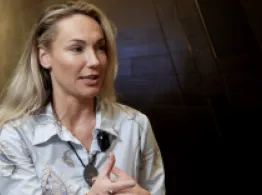
Zach Conway, Founder and CEO of Seeds, shared how Seeds' TAMP model seeks to solve for the disconnect between client values and actual portfolio allocations. Conway sat down with Dave Nadig at Schwab Impact 2025. Below is the full transcript of their conversation.
Transcript
Nadig: Zach Conway, Seeds, so glad to talk to you.
Conway: Great to talk to you.
Nadig: I was introduced to you from a friend of mine who said that you were the only TAMP with a soul. Gotta tell me what that means.
Conway: I love it. And by the way, we stole that and have been using it all week, so I may have to pay him some money for that one. So what does it mean? We think that investment management, the storytelling around it, should be more about the client and what's important to them and how they think about investing as opposed to whatever sort of prescriptive story an advisor and advisory firm already has around investment management. That stuff's important, you need to have it, but how do you shape the narrative around them and that starts with an understanding of them? So how can you understand an investor in a deeper way beyond a risk tolerance number?
Nadig: None of what you said sounds like what a TAMP does. So explain to me how what you just talked about, which sounds to me like being an advisor with purpose, like and I'm a big fan of all of that, none of that sounds like investment management when people say turn-key asset management program, they think, “Oh, it's the people I shovel the money to.” So that's clearly not what you're talking about.
Conway: So, it's if you get that understanding then what are you going to do about it? How do you actually take that understanding and move it down the line in the form of a personalized portfolio outcome and then the implementation of that? So when we realized, I was an advisor by background and in the room with clients realizing, wow, I could really tell a better story if I got to know how they think about investing. What does this mean to them?
But if I ask, what the heck am I going to do about it on the other side? So that was the next piece, how do I build an actual portfolio outcome and then go down to the next step and actually implement that portfolio? So we realized we have to build an assessment tool, but then a proposal and the implementation mechanics to push it all the way through that experience.
Nadig: So you're bringing the TAMP model really down to the first meeting in some ways.
Conway: Yeah, yeah, it's almost adding just an experience layer and a first step in that assessment experience as the seeds of what you're going to do with the portfolio and the implementation through that process.
Connecting the Pieces: From Values to Allocations
Nadig: So you go, I'm a client of an advisor who's working with you all. I go through what is your assessment process that you've worked with that advisor to develop. I give a bunch of information in there and then you say, you get a profile of what kind of human being I am and what's important to me.
What's the step between that, which sounds to me to be honest a lot like a lot of intake surveys, what's your risk tolerance, you know, if you found a turtle on the ground would you flip him over, that kind of stuff, like psychological profiling. The gap from that to "and I would like a portfolio that looks like this," the only time we've really seen that has been in sort of the ESG side of things which, you know, let's be honest, that's fallen way out of favor since the pandemic. Right?
And I'm a big believer that people should have ways of investing in their values with their social conscience if that's what they choose to do. How are you bridging that gap from the "Okay, you figured out Dave's a weirdo and should have a different portfolio" to "that means he owns X percent of Nvidia"?
Conway: Yep, yeah, so in the actual output, that includes values preferences, so is someone actually motivated by values alignment? I would love to know that as your advisor, is that something that's important to you? If it is, how so? What are the specific areas of the market that you want to include or exclude as it relates to your personal value.
And then to your question, how do I then connect that to an actual equities part of your portfolio that reflects those screens in and out of that type of stuff you want to include or exclude? But that to your question is one dimension. I also need to know risk tolerance. I should also know what your goals are.
Nadig: Am I retiring next year? Like the normal stuff an advisor needs to know.
Conway: Exactly. What's amazing and what we've found is even on the goals component, there's not a lot of consistency often with what are your goals and what is an optimal asset allocation that reflects those goals in a clear way? So we really have to help with all the layers of the onion, right? What are the goals, inputs, to an asset allocation?
Direct Indexing Benefits
Nadig: Give me, break that down, give me an example. Where do you think that you're capturing something that other folks might be missing? In terms of like, if you can, like what's the thing that you're catching and how does that change the portfolio versus what their experience might be with another advisor?
Conway: So one piece of it is direct indexing which has that values solution through using direct indexing. It's also a tax loss harvesting concept. So if someone's in a high tax bracket, has a lot of taxable money, maybe they're trying to unwind a legacy position in their existing portfolio, that might be a great building block in a portfolio to solve those use cases.
Nadig: Okay, so that might drive them towards direct indexing, which you guys have implemented your own stack for, right?
Conway: Yeah.
Nadig: So that puts me into the direct indexing world, now there's the next question which is okay, I now have a direct indexing platform, I could buy every security I could trade here at Schwab. How are you determining that the portfolio is now matching this data that you're collecting? Like how does that actually filter down into the portfolio decisions?
Conway: In terms of the screens that might be applied to it? So using third-party data – we're not a data provider so we use third-party solutions to actually look at that investable universe. So, think of U.S. large cap, U.S. mid cap, small, international emerging, international developed. Let's say that is in a 60/40, that's 60% of your allocation.
And because the client is in a high tax bracket and they have those values preferences, that'll be direct indexing exposure in each of those sleeves and then using the third-party data to essentially amend that exposure to the index. So if you take large cap, you're not going to own all 500 companies of the index but you're going to own a group of that index that ensures using the data. If there's things that you don't want to be invested in, that you won't be invested in, and maintaining a low tracking error to try to continue to track to that S&P 500 exposure.
ETFs, Tax-Efficiency, and RIA Scaling
Nadig: Now of the folks that you're working with, like what percentage of the assets are really going to end up in direct indexing because I mean I'm a believer, my money's in direct indexing products. Like is that really the solution here or are you also doing more traditional, you know, here's seven ETFs kind of model portfolio stuff?
Conway: That too, because direct indexing to your question isn't always the solution. IRA money and there's no values preference probably shouldn't be doing direct indexing in that exposure. And so we need to again, it goes back to the logic framework of if it's an IRA, no values exposure, what is the ETF-based exposure to populate that part of the portfolio for the client?
So as an example, let's say a client has a taxable account and an IRA account, what is the asset allocation exposures within those two accounts? But the underlying building blocks in the IRA might be funds and the underlying building blocks in the taxable account might be the direct indexing and the inputs from that intake are helping the advisor create all of that, right? What is the household level allocation, how am I breaking that down to the taxable money, the IRA money, what are the building blocks underneath, where am I putting the muni exposure?
All those configurations, the tax settings, we call it the easy button. If you get all this information, you know, advisors tend to be nervous to get the information because you have to do something about it. And so that's the logic, right, if you get it all in all those layers of the onion here's what should come out the other side that you can press go and get implemented for the client.
Nadig: It sounds like what you've built is pretty highly customizable at the RIA level, right? The RIA coming in isn't getting kind of a cookie cutter approach. That implies you're not going to be signing up tens of thousands of advisors because there really has to be a fit for them to need that kind of customization.
There are lots of advisors that obviously are kind of just going to cookie cutter the asset management part. How do you attract those kinds of advisors? I mean I know there is a movement in the advisory industry towards sort of more human-centric advice, I'm guessing that's a market that you're playing in, but it's also not – they don't necessarily show up at conferences. How do you get to those folks?
Conway: Yeah, well I will say even for firms where that's maybe not their primary rationale for having a conversation with us, they are having scale challenges with, “How do I translate a discovery meeting with a prospect into a logical portfolio outcome,” that tends to often be in the primary advisor's head. They've done it for many years, they feel capable in that discovery meeting to have the conversation with the client, but they can't repeat it, they can't pass that, there's no framework, right?
So they can't pass a framework to the second chair advisor who's going to succeed in that business and help transition the business to the next generation of advisors if it's in that advisor's head. So those firms are also talking to us to say, “We need that framework, we need an input-output framework as it relates to goals, what model should come out the other side every time, when will we use direct indexing? Even if we're not coming in the door saying we really, really think we should be understanding values and all these other preference areas,” which obviously we think advisors should be doing that, but even if they're not primarily thinking that yet, they have this scale challenge that we can help them solve as well.
Nadig: Right, I mean you're in some ways taking what is traditionally siloed as part of the financial planning process and putting it more into the portfolio construction process. Is that an accurate way of thinking about it?
Conway: It is and it's a great point because we so often see that those two things are disconnected. You're sort of doing a financial plan and then you're doing a risk tolerance questionnaire and picking a model and that investment portfolio, that allocation is not necessarily actually optimized to the plan.
So that is another part of what we're trying to solve is how do you make this more of a goals-based framework with the inputs to get an asset allocation that makes sense for that, you know, set of goals? And then the advisor can test what that allocation is in the longer term financial plan. But it helps them get from A to B quicker and I think in a more reasonable way than a risk tolerance questionnaire to get to an asset allocation.
Building From Family Business Roots
Nadig: Now you when we were just getting to know each other, you said you came from sort of a family business in the financial advisory space. Why the desire to jump out to this side of the frame? It's a very different kind of business.
Conway: Yeah, yeah, I always say lucky enough to be able to kind of jump into the business, spent some time in the corporate world, but have a dad who's been an advisor since 1984. When I joined him, the thing I saw immediately, in the room with the client, was the reason they were there was because they knew they were – he was going to understand them deeply and connect understanding to the logical financial planning outcomes. That's all it was.
Nadig: But that's just because that's who he was.
Conway: That's who he was.
Nadig: It wasn't a system, it was who he was.
Conway: There was no framework, it was in his head, but it was only for the financial planning concepts. I'm going to do a deep discovery: hopes, dreams, aspirations, family dynamics, health issues, deeply understand you, connect that to financial planning outcomes.
But then I watched sort of this weird shift happen when we got to the investment management conversation where all of a sudden rather than, “Let's understand this person as an investor”, it was, “Let us tell you about how smart we are at managing money. And what products we use, and how many CFAs we have on the team, and we have these special alternative products that other advisors don't have even though everybody has them.”
And it felt so weird and I sort of, as fresh eyes watching that unfold, seemed like an obvious paradox and on top of that the fact that then we had so much operational burden to actually implement portfolios. So crappy experience, burden operationally, why are we living this way? Right? And so what if we could do, have the same arc of deep understanding to outputs just in the context of investment management and make the story about this person's portfolio, their values, their thematic interests, do they want to invest in AI or crypto or whatever?
I should know those things. I shouldn't find those things out six months into the relationship accidentally. That's who that person is and what they care about and how they want to see their money managed. So I should find that out, they're going to feel heard and understood and feel the way and feel the value that they felt with my dad in that other part of the journey but do it with investment management. So that was the lightbulb moment.
Nadig: That's really cool. Well you guys have clearly carved out a wonderful human niche here in this corner of the industry. It's been great getting to know you.
Conway: Great to talk to you.
Nadig: Thanks Zach.
Discover the news, data, and voices shaping the ETF community. Follow along here.