
Treading Quicksand: Investing in a Trustless World
Ben Hunt, Mike Green, and Dave Nadig explore how algorithms, passive investing, and AI-driven narratives are reshaping our financial reality. From the role of passive flows to the end of subsidized tech, discover why navigating and investing in today’s economy feels like treading quicksand.

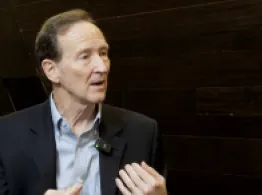
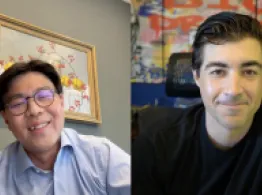
In a recent candid discussion at the ETF Beach House during Future Proof Citywide, Dave Nadig sat down with two of the sharpest contrarians in finance: Ben Hunt, Co-founder and President of Perscient and author of Epsilon Theory, and Mike Green, Portfolio Manager and Chief Strategist at Simplify. The conversation moved quickly from the vibes of the stock market to navigating investing in the structural quicksand of our modern financial system.
If you’ve ever felt like the market is disconnected from reality, these experts suggest you’re probably right—and they’ve got the data to prove it.
The Architecture of Vibes
All advisors are storytellers, according to Ben Hunt. Common industry terms like value, momentum, and multiple aren’t just cold, hard metrics—they are narratives that drive investor behavior. Hunt argues that we live in a world where media and algorithms present a specific version of reality to us. His investment philosophy isn't about knowing what is the most true but rather identifying when the presentation of reality gets too far ahead of (or behind) the actual facts.
Mike Green takes this a step further in his views that passive investing isn't just a trend, but a rigid algorithm that now drives the boat of the entire market. Green describes passive investing as feeding news and driving securities in a mechanical way. 90% of the market might ignore these structural flaws, but they create massive alpha opportunities for those who can see through the matrix.
The talk then turned to AI and how we are currently benefit from artificially depressed costs for AI, similar to how venture capitalists once subsidized $5 Uber rides. However, this era of cheaper costs is likely coming to an end as the cost of capital rises and the liquidity flow in the world reverses. While Green remains hopeful that AI will become a mainstream, generalized technology that eventually raises human productivity (like eyeglasses or the steam shovel), Hunt worries about a world of destruction within the finance sector as these bubbles burst.
Living Without a Map: Advice for the Next Generation
Perhaps the most grounded moment of the talk was when Nadig asks how these experts, both parents of young adults, are advising their own children in such an unpredictable era. Ben Hunt admitted he is "100% clueless" about where the world is going; he avoids being didactic with his daughters, instead encouraging them to fully engage with and apply their minds to their pursuits, regardless of whether their chosen career paths might be disrupted by technology. Mike Green offered a different approach, encouraging his children to take risks — as they benefit from the financial buffer he can provide — while pursuing vocational opportunities.
The takeaway from the Beach House? We are in a period of transition with the tide retreating from the world we knew. Whether you're an investor or a parent, the goal isn't necessarily to predict the future, but to recognize the stories being told to you—and to make sure you're not the one left standing when the narrative shifts.