
After the Fed’s Hawkish Cut, What’s Next for Bonds?
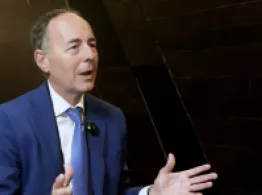
Bond trader Soren Erickson weighs in on the Fed’s “hawkish cut,” why he’s cautious on duration, and what’s next for yields.

The Federal Reserve may have just lowered interest rates, but that doesn’t mean investors can count on a steady string of cuts from here.
“It was a hawkish cut,” said Soren Erickson, a fixed income trader at Badgley Phelps, a Seattle-based wealth management firm overseeing about $6 billion. “They cut rates, but everything in the press conference pushed back on the notion that we’re on a preset course for December.”
The Fed lowered its benchmark rate in October, marking its second cut of 2025, but Chair Jerome Powell emphasized that future decisions, including December’s, will depend on incoming data. Erickson believes that message, paired with still-elevated inflation, has left markets wrestling with mixed signals.
“The Fed’s in a challenging spot,” he said. “Weakness in the labor market calls for lower rates, but persistently high inflation calls for higher ones—and you can’t do both.”
Easing Isn’t Over, But Volatility Will Stick Around
Despite the Fed’s cautious tone, Erickson doesn’t think the story ends here. Even after October’s cut, the Fed’s target range of 3.75%–4% for the federal funds rate remains above the 3% neutral rate estimated in the September SEP, suggesting there could be more room to ease.
“This isn’t the end of the easing cycle,” he said. “Rates have room to go lower from here, especially on the front end.”
But with the timing of any future cuts still unclear, volatility is likely to stay elevated, especially on the short end of the curve as traders gauge the Fed’s next move.
That uncertainty hasn’t stopped investors from parking cash in ultrashort funds. The iShares 0–3 Month Treasury Bond ETF (SGOV), a money-market-like fund that holds T-bills with virtually no interest-rate risk, has been the second-most popular U.S.-listed ETF this year, pulling in nearly $30 billion in inflows.
Muni Market Absorbs Record Issuance
Erickson, who focuses on municipal bonds, highlighted one of the year’s more surprising developments: record-high supply with little visible strain on the market.
“We had about $500 billion come to market last year, which was a record after two low years of issuance,” he said. “We’re going to eclipse that this year and may even hit $550–600 billion in 2026.”
What’s impressed him is how smoothly that supply has been absorbed. “The AAA muni-to-Treasury ratio is still in the mid-60% area—basically where we started the year,” he noted, calling that low by historical standards.
That downward trend means tax-exempt bonds offer less of a yield pickup over Treasuries than they once did. “At these levels, they make sense for investors in the highest tax brackets, but not too much below that,” he said.
ETF investors have nonetheless continued to add exposure. The Vanguard Tax-Exempt Bond ETF (VTEB) has gathered $5.5 billion in inflows this year, while the iShares National Muni Bond ETF (MUB) has added about $600 million.
Tight Credit Spreads, Limited Upside
Beyond munis, Erickson sees credit markets as stretched.
“Spreads have been compressing for a while,” he said. “It keeps feeling like there’s not much room for them to get tighter. At some point, there’s a better chance they widen out than tighten materially further.”
That dynamic makes Treasuries relatively appealing. “You’re not getting paid much extra for taking credit risk right now,” Erickson said. “So we’re a little more interested in Treasuries than we would normally be.”
Still, corporate bond funds remain in favor with ETF buyers. The Vanguard Intermediate-Term Corporate Bond ETF (VCIT) has pulled in $6.6 billion of net inflows so far this year.
Duration Caution Amid Inflation and Fiscal Risks
For investors debating how far out on the curve to go, Erickson advises restraint.
“When rates start falling, there’s a temptation to extend duration and lock in yields,” he said. “But I’d be hesitant to pile heavily into duration right now.”
He cited two major risks still lingering in the background: sticky inflation and a ballooning federal deficit. “We’ve made progress on inflation, but we’re still about 100 basis points above target,” he said. “The Fed’s own projections don’t get us back to 2% for another two years.”
Fiscal concerns, meanwhile, haven’t gone away. “We’re running a deficit around 6% of GDP,” Erickson noted. “That’s fallen out of focus recently, but it hasn’t disappeared. If tariff revenue is rolled back or companies start suing to recoup those payments, that could bring the fiscal picture right back into the spotlight, and we might see those proverbial bond vigilantes start to exert pressure on the longer end.”
ETF investors appear cautious too. The iShares 20+ Year Treasury Bond ETF (TLT) has seen $2.9 billion in outflows this year, after attracting tens of billions over the previous three.