
What Happens If Trump Gets His Way With the Fed?
President Trump’s fight with the Fed has raised questions about central bank independence. Economist Brian Jacobsen warns that slashing rates too far could backfire.

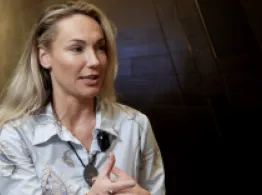
President Trump’s attempt to fire Federal Reserve Governor Lisa Cook may have rattled Washington, but Brian Jacobsen, chief economist at Annex Wealth Management, isn’t buying the idea that the central bank’s independence is suddenly at risk.
“The way that I look at things is that if she is ultimately fired from the board, that just means President Trump will have a majority of the appointees,” Jacobsen said in an interview this week.
“That doesn’t mean that it’s guaranteed that they’ll be President Trump’s allies. I think that Chris Waller and Michelle Bowman are still independent thinkers, and they’re going to be really having their decisions driven by the data and not by whoever it is that appointed them.”
That perspective helps explain why the market’s reaction was subdued. The yield on the 30-year Treasury ticked up 3 basis points, while the 2-year fell 11 basis points in the two days following Trump’s announcement. The 10-year breakeven rate, a market measure of inflation expectations, rose just 2 basis points.
“These aren’t really outside of the norm of what you would expect on any given trading day or trading week,” Jacobsen said.
If Trump Gets His Way
I asked Jacobsen what might happen if Trump did succeed in taking more direct control of the Fed and tried to drive rates sharply lower. His answer was that it could backfire.
“If we push the Fed funds target rate down to [1% or 2%], that would likely expand the money supply and over time lead to faster inflation,” he said. “I would expect we’d see that 30-year Treasury yield move significantly higher.”
Concerns like these may help explain why long-term bonds underperformed this week. The 30-year Treasury yield hovered just shy of 5%, while funds such as the iShares 20+ Year Treasury Bond ETF (TLT) struggled.
Jacobsen also suggested that cutting interest rates would perversely make the deficit picture worse. While lower short-term rates might initially reduce borrowing costs, the longer-term picture could deteriorate.
“Eighty-two percent of Treasuries that are issued to finance the debt, those are Treasury bills, so the vast majority of the government’s borrowing costs is actually tied more towards those shorter term interest rates,” he said. “What we could see happen is the government’s fiscal situation in the near term improves if they lower those Treasury bill rates, but over the longer term, it would just get progressively worse and worse and worse as those Treasury note and bond yields move higher.”
September in Play
While there is much uncertainty about what happens with Governor Cook and Fed independence, when it comes to near-term policy Jacobsen said the outlook is clearer.
“I think that the September rate cut is almost a done deal. We’ll have to see what happens with some of the data between now and then. But I think that Powell’s bias is to cut in September.”
The open question, he added, is whether that becomes the start of a longer rate cutting cycle or a one-off adjustment. “It could be more like this fine tuning, almost kind of fiddling with rates where they cut in September, wait to see how things go, and then maybe cut again in December,” or it could be “a sequence of rate cuts.”
Bonds and the Curve
I asked Jacobsen what investors should do in light of his outlook. He pointed to the five- to seven-year part of the curve as a relative safe zone.
“If we do see any big moves in the yield curve, it’s likely to be on the long end, as people think about that longer term inflation picture and the longer term budget picture of the U.S. government.”
Investment-grade corporate credit, he said, remains attractive, while high yield looks less compelling. “Spreads are very, very narrow. So it doesn’t feel like you’re getting a lot of compensation for the possibility of defaults that could happen with high yield.”
ETF investors have been putting cash to work in both investment grade and high yield bonds, with the Vanguard Intermediate-Term Corporate Bond Index Fund ETF (VCIT) and the iShares Broad USD High Yield Corporate Bond ETF (USHY) among this year’s most popular bond funds.
Risks on the Short End
I also asked Jacobsen whether short-term investors should worry about reinvestment risk once rate cuts begin. There has been huge demand for Treasury bill funds this year, with investors plowing billions into the iShares 0–3 Month Treasury Bond ETF (SGOV) and the SPDR Bloomberg 1–3 Month T-Bill ETF (BIL).
“When you invest on the short end of the curve, you have that reinvestment rate risk,” he said. “But I think that if the Fed goes at a glacially slow pace with their rate cuts, people kind of feel like maybe they can take on that reinvestment rate risk because they’ll see it coming. They’ll be able to move out along the curve as they need to.”
“It’s not the days of the 80s and 90s where the Fed would move in a little bit more unpredictable fashion. I think that because of that almost kind of slow and steady approach to changing interest rates, it has lulled people into thinking that they don’t have to worry about reinvestment rate risk because it’s a kind of a risk that’s going to be a very slow moving vehicle coming at you that they can just dodge out of the way.”