Behind the Ticker: The DRES ETF
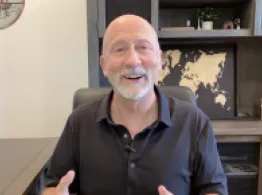
This episode of Behind the Ticker features Sam Klar, PM of DRES at GMO, who discusses deglobalization and investing opportunities in an increasingly multipolar world. DRES bets big on U.S. resilience, combining GMO's active research and focus on quality and value.

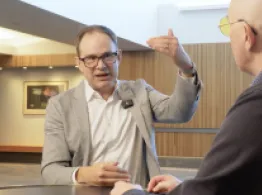
Behind the Ticker offers investors a chance to get under the hood of newer or more niche ETFs. Brad Roth, Managing Partner and CIO of Thor Financial Technologies, talks strategy and the human side of investing and ETFs with the individuals bringing these funds to market.
In this episode, Roth sits down with Sam Klar, Portfolio Manager at GMO, to talk the fund he manages, the GMO Domestic Resilience ETF (DRES). The discussion digs into the quality and value focus that underpins GMO's strategies and how that manifests in DRES, as well as a deep dive on the strategy itself and how its bipartisan approach works across different administrations.
You can also listen to this episode on SpotifyApple Podcasts, or your preferred streaming platform.
Investing for Deglobalization and U.S. Resilience
Sam Klar joins the show to discuss his nearly 20-year journey at GMO, from joining the investment team directly out of undergrad to helping launch one of the firm’s newer ETFs, Domestic Resilience (DRES). The conversation covers GMO’s core investment philosophy, the strategic rationale for building DRES, how the portfolio is actually constructed, and how advisors can implement the fund inside existing model portfolios.
Klar explains that GMO’s DNA is built on quality, value, and conviction — identifying where the largest opportunities exist, concentrating resources there, and being willing to look different from the crowd when the research supports it. He says that mindset is especially important in active management, where trying to be all things to all people usually dilutes edge.
Klar says GMO’s move into the ETF wrapper was driven by access and alignment. Historically, many of GMO’s institutional strategies required high minimums, which made it difficult for smaller investors to participate. The ETF structure allows institutional clients, advisors, and individuals to invest in the same vehicle, and for Klar personally, it also solved a long-standing frustration of not being able to offer friends and family access to the same strategy set he worked on professionally. DRES, which launched in October, came out of a multi-year research effort on deglobalization and the transition toward a more multipolar world. Klar argues that as borders, supply chains, and strategic independence become more important, “resilience” becomes a practical investment concept rather than just a policy talking point.
He frames the core portfolio problem this way: many investors think they have enough U.S. exposure through broad benchmarks, but those portfolios are often multinational in revenue reality. DRES is intended to provide more direct exposure to U.S.-linked economic resilience by emphasizing companies with much higher domestic revenue dependence. The strategy starts from a broad set of resilience beneficiaries, then narrows into four internal buckets: manufacturing and automation, transportation and logistics, energy and materials, and defense. Klar says GMO did not rely on standard sector labels alone because those labels often fail to cleanly capture resilience exposure. The final portfolio is concentrated, usually around 35 to 40 holdings, selected through bottom-up fundamental work focused on business quality and valuation discipline.
A major part of the discussion is that DRES is not a narrative-first theme product. Klar repeatedly emphasizes that valuation still governs position sizing and timing, even when the thematic fit is strong. He gives examples where GMO liked a business but waited for better entry levels rather than forcing exposure. Brad challenges whether DRES is simply an industrials sector bet wrapped in thematic language. Klar responds that broad industrial ETFs can include businesses with weaker domestic linkage and significant global revenue dependence, whereas DRES is built to be more selective at the company level. He points to transportation and logistics as a good example of this stock-level approach, using a “picks and shovels” framework: instead of trying to predict every direct winner from reindustrialization, own enabling businesses that benefit from rising domestic throughput across many outcomes.
The conversation also addresses policy dependence. Brad asks how much DRES relies on whichever administration is in power. Klar says the resilience trend is more bipartisan and durable than many investors assume, arguing that domestic industrial capacity and strategic supply-chain strength are long-cycle priorities that extend beyond a single White House term. On competitive positioning, he says GMO differentiates DRES through concentrated active management, explicit domestic exposure intent, and fee competitiveness. For advisor implementation, he frames DRES as a satellite allocation to complement global or tech-heavy core holdings, not replace them — a way to add an underrepresented macro exposure while maintaining core equity structure.
Klar closes by saying investor response has been stronger than expected, especially from allocators who are beginning to realize how underweight they may be to domestic resilience themes. He points listeners to GMO’s fund materials and his LinkedIn newsletter, The Resilience Rundown, for deeper ongoing commentary on both the macro thesis and stock-level portfolio decisions.
Discover the news, data, and voices shaping the ETF community. Follow along here.
Disclaimer: The market insights, projections, and investment strategies expressed in this article are solely those of the contributor and do not necessarily reflect the views or opinions of ETF.com This content is provided for informational purposes and does not constitute financial, investment, or legal advice.