Behind the Ticker: The MOOD ETF
Discover the strategy behind the MOOD ETF in this episode of Behind the Ticker. Learn how Relative Sentiment Technologies' Raymond Micaletti tracks smart money positioning to navigate market volatility and tactical investing.

Behind the Ticker offers investors a chance to get under the hood of newer or more niche ETFs. Brad Roth, Managing Partner and CIO of Thor Financial Technologies, talks strategy and the human side of investing and ETFs with the individuals bringing these funds to market.
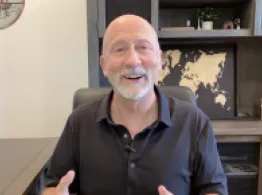
In this episode, Roth sits down with Raymond Micaletti, co-founder and CIO of Relative Sentiment Technologies to talk the Relative Sentiment Tactical Allocation ETF (MOOD). You can also listen to this episode on Spotify, Apple Podcasts, or your preferred streaming platform.
The MOOD ETF & Relative Sentiment Investing
Raymond Micaletti's path to Wall Street came through Princeton, where he studied probabilistic engineering mechanics—analyzing buildings in earthquakes and airplanes in turbulence. The math behind those systems is the same math used to price options, making the transition to finance a natural one. After years in systematic long-short equity and global macro, he shifted to tactical asset allocation around 2014. While building out value, momentum, and sentiment strategies, he stumbled on a Lehman Brothers pamphlet from a decade earlier that showed how institutions were positioned relative to retail traders. He implemented the concept, found it underwhelming at first, but kept refining it. The breakthrough came in August 2015 when the market sold off and all his indicators turned bearish except relative sentiment—and the market ripped 10% in a straight line. It happened again six months later. He stopped ignoring the signal.
MOOD is a multi-asset, tactical asset allocation ETF built on a single premise: institutions consistently outperform retail traders, and there are structural reasons why. They have superior information networks—ex-Fed governors, senators, lobbyists, and corporate CEOs on speed dial. They have deeper pools of human capital with a constant pipeline of MBAs, CFAs, and PhDs backed by the best data and technology. And critically, there's an information asymmetry at play: retail gets its ideas from CNBC, Bloomberg, and institutional research reports. The defense is literally calling the offense's plays. The MOOD ETF attempts to align its allocations with how institutions are positioned relative to retail—essentially riding the coattails of the smart money.
Ray uses two primary data sources to construct his signals. The first is actual positioning data from the Commitments of Traders report, though he emphasizes that most people look at it wrong—raw contract counts need to be normalized since money supply and GDP grow over time. The second is survey data from separate polls of institutions and retail investors. The math itself is surprisingly simple: he calculates a Z-score of current positioning relative to typical positioning for each investor class, compares them, and determines if the spread is above or below median. Above median means bullish, below means bearish. For equities specifically, Ray averages five separate relative sentiment indicators. Three or four of these are "cross-asset" signals—using positioning in currencies, natural gas, or long-duration bonds to predict equity returns. This approach draws from academic research showing that predictive power increases when you look at correlated instruments together.
The portfolio construction differs between equities and everything else. The equity side is purely rules-based with five indicators averaged together. The non-equity side—dollar, bonds, precious metals, commodities—involves some art. Ray considers signal direction, expected duration, and historical performance including Sharpe ratio, CAGR, and max drawdown. Historically, precious metals have produced the strongest signals, followed by commodities, then long-duration bonds, then the dollar. He rebalances weekly on Wednesdays, but only if the target allocation is more than 10 percentage points from current allocation. This keeps turnover in check and avoids trading noise. The fund itself is a fund of ETFs using the most liquid, lowest-cost options available.
The common knock on tactical strategies is whipsaw—getting chopped up in sideways markets. Ray argues relative sentiment sidesteps this problem because it's based on positioning rather than price, and positioning changes slowly. Averaging across five indicators smooths the signal further, and the 10 percentage point threshold prevents unnecessary trades. That said, the approach has a known weakness: sudden policy shifts. In March 2009, Q4 2018, and April 2025, smart money was correctly bearish—but policymakers intervened and markets ripped higher. It took two to four weeks for relative sentiment to flip bullish, missing meaningful upside in each case. Being less price-sensitive helps avoid whipsaw but can cost you when the rules of the game change overnight.
Ray makes a compelling case for combining relative sentiment with trend following. Trend following buys high and sells low, following momentum wherever it leads. Relative sentiment tends to do the opposite because institutions are typically on the other side of retail, and retail buys high and sells low. Put them together and you get thinner tails, lower tracking error to a theoretical perfect foresight strategy, and a more stable emotional experience. You'll never be euphoric with the best return, but you won't be despondent with the worst either. They complement each other naturally—relative sentiment outperforms in strong uptrends while trend following outperforms around drawdowns.
To learn more about Ray and Relative Sentiment Technologies, visit www.relativesentiment.com where you can sign up for their free weekly newsletter covering positioning changes and what they mean for different asset classes. The ETF-specific site is relativesentimentetfs.com. You can also find Ray on Twitter at @relsenttech.
Discover the news, data, and voices shaping the ETF community. Follow along here.
Disclaimer: The market insights, projections, and investment strategies expressed in this article are solely those of the contributor and do not necessarily reflect the views or opinions of ETF.com This content is provided for informational purposes and does not constitute financial, investment, or legal advice.