ETF Zoo Podcast: International Stock Trauma and Why Investors Hesitate
Welcome to ETF Zoo, where we check in on the latest happenings in the wild world of ETFs. Below you'll find the full transcript for the podcast. If you prefer to watch the video with timestamps for topics instead, go here.

Welcome to ETF Zoo, where we check in on the latest happenings in the wild world of ETFs. Below you'll find the full transcript for the podcast. If you prefer to watch the video with timestamps for topics instead, go here.
This week's conversation features a deep dive into international waters as the experts break down why investors still hesitate to dip a toe in, a private credit pulse check, crypto update, and a collective verdict on small-caps in the next year.
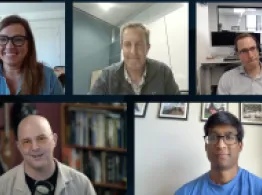
Hosts Dave Nadig, President and Director of Research at ETF.com as well as Sumit Roy, Senior ETF Analyst at ETF.com, are joined by industry experts to cover the latest and greatest happenings in ETFs. This week's episode features Bryan Armour, CFA, Director of ETF & Passive Strategies Research, North America for Morningstar; Aniket Ullal, SVP and Head of ETF Research and Analytics, CFRA Research; Cinthia Murphy, Investment Strategist, TMX VettaFi; and Nate Geraci, President of NovaDius Wealth Management and Host of ETF Prime.
Full Transcript
Nate Geraci (00:00): I think that you could have a recipe for retail investors to continue putting money into these products. I personally don't get it, but I can see the allure again from a retail investor where they have these distributions hitting their account like clockwork.
Assessing Interest in Private Credit ETFs
Dave Nadig (00:20): Welcome everybody back to ETF Zoo, the ETF.com occasional show where we try to dig into all of the insanity that is going on in the ETF market right now. We got a different crew this week. We're going to try to rotate people through every time. This week we've got Sumit Roy, Nate Geraci, Cinthia Murphy, Bryan Armour and Aniket Ullal. We're going to just dump right into this. Bryan, I want to kick things off with you. I'm going to go ahead and share a screenshot of something of yours.
All right, so you guys put this out on Morningstar, you're starting to actually rate some of the non-liquid funds in the private credit space. These aren't ETFs, really, but they are what is competing with the private credit ETFs we've seen here. At the same time you guys are doing all of this work, I point out that I look at the State Street product, PRSD, which they launched a couple of weeks ago, and it literally has traded more than a couple hundred dollars in weeks.
So how is this actually a giant boom market and is it really worth doing this much work when it seems like there's not actually that much buying interest going on in private credit? What do you think?
Bryan Armour (01:25): Yeah, well, I think there is interest in buying private credit mostly through interval funds and BDCs more so than ETFs at this point. You know, I the second iteration of the State Street Apollo collaboration, which is the chart you were just showing was, is really not really catching on much investor interest. And I think one of the problems is that because people, investors, the typical retail traders dealing in ETFs don't have great insights into what private credit is.
What does that even mean? And I think private equity, think there's a better sales pitch there in terms of something like SpaceX. There's more brand value and brand awareness. But in reality, like, private credit is probably the best suited of all the private assets to be in an ETF, but it has to be in a smaller percentage.
We saw State Street come in with like, you know, a way to get around sort of the 15 % rule and got a backstop from Apollo to bid on some of their private credit. And so they got a higher increment, but it is sort of like the most public of private debt that is in their portfolio. And it's still in the increment. They'd rather take the building blocks and put them together themselves. So that sort of mixed public-private portfolio is a hard sell in the ETF.
Dave Nadig (02:50): I mean, Nate, you're the only one here who's actually an advisor and has to talk to real people in the world. Are you getting any demand for this stuff? And if you are, you looking at ETFs? Are you looking at things like Interpol funds and direct BDC investments and closed end funds and all the other ways that wealthy people can get access to this stuff?
Nate Geraci (03:07): Yeah, literally zero demand. And I would say relative to the hype at the beginning of the year, these private credit ETFs have been a huge disappointment, in my opinion. But I'm also not surprised because we weren't hearing from clients on this. You know, I was saying from the beginning, nobody is really asking for this.
And to me, it felt like retail-esque investors and advisors were being targeted as exit liquidity for overvalued private credit. That's what it felt like to me. It just didn't make sense. And it also didn't make sense to me how we were going to stuff private credit into an ETF wrapper and handle things like liquidity and valuation and all of those sorts of items.
So to what Bryan was saying, I will say I can see more of a use case on the private equity side simply because there are so many companies that are staying private longer. And I think retail investors and advisors, they can't easily access those companies. And some of those companies have tremendous stories around them. So that actually makes sense to me.
But there's still a lot you'd have to work out in the ETF wrapper in terms of how you value this stuff and the underlying liquidity. So I don't know, I'm always a huge fan of the ETF wrapper. We always talk about how it democratizes access to asset classes.
I do think the ETF wrapper can help shine a light on opaque parts of the market. And so I think it can do that here in the private space. I just, I don't know that this is something that investors really want or they really need.
The Reluctance to Diversify Into International Markets
Dave Nadig (04:33): Yeah, okay. I'm sort of with you on that one. Let's go ahead and move on here. Cinthia, you put up a piece recently looking at China. China is one of those really interesting stories this year where I think everybody was so excited that the US market has gone up that we get to say, you know, all the South America people were wrong. But meanwhile, every other market in the world has done better than the United States. China being the big one. I mean, it's basically doubled the S&P over the last year.
What do you think's going on here? Are we just in a world where nobody wants to actually diversify?
Cinthia Murphy (05:06): Actually, I think we're diversifying more than we usually do. So I was looking at just overall aggregate flows and international equity. So both developed emerging frontier, all of that has taken over 30 % of flows of the equity flows this year when their asset footprint is just over 20. So just from that perspective, okay, demand is strong relative to the asset footprint, but China has been a complete reject in the ETF world. And who pointed it out to me was Jeff Weniger at WisdomTree. And he’s like “I have never seen a year where China with entry has a China fund is our best performing fund and we have at zero assets zero Interest this year”.
So it's I think it's a space where there's so much negative headlines. Whether it's tariffs, you know trade, whether it's uncertainty about the real estate crisis and government spending there, and the consumer who's weakening, and you know GDP growth there is strong but it's the slowest – the last read was the lowest it's been in a year.
So there's some concern about China. So I think folks just have chosen other parts of the international equity space. If you look at top 20 ETFs and equity flows this year, only one is an emerging market ETF. Everything else is primarily US and then a couple European funds. So it's a space that continues to, I think, battle negative headlines more than anything. I mean, especially China tech funds. Those ones are up like 40 % this year.
Dave Nadig (06:36): Like KWEB, the KraneShares fund. It's just bananas.
Cinthia Murphy (06:39): Exactly. And they just came out with news on the latest five-year plan. And China came out and saying it's all going to be about building out self-reliance in technology and science and high-quality technology names. So they're really leaning into that space. I think that's going to be a space that remains compelling, but we've got to get rid of the negative, the fear-mongering, I think, when it comes to Chinese equities.
Dave Nadig (07:04): Yeah, Aniket, I want to put up a chart you had because I think this is sort of the same thread. Which is that, like, we have all of these under the radar sectors of the economy globally, under the radar individual funds that nobody is paying attention to. They're actually crushing and it feels weird to me. Talk me through this. You did some research looking at this. You picked a couple out here, but what's the trend?
Finding Hidden Gems in Today's Markets
Aniket Ullal (07:15): Yeah, I think it's interesting at the end of the year to look at what are the big themes that have done well that investors have kind of missed or not paid enough attention to. And to be fair, some of these have got close, but it's nice to tie them to the bigger macro story, particularly when a couple of themes combined together. So if you look at, for example, SHLD, it's really combining two or three different things – combining the fact that we've got much more defense spending in the One Big Beautiful Bill.
We've got the fact that the US is pulling back a little bit from NATO. So you've got much more defense spending in Europe and you've got a weaker dollar, of course helps. You know, ETFs are denominated in dollars. So all of those three things have combined to help ETFs like SHLD.
If you look at something like SOCL, which is a social media ETF, you know, you've got the fact that we are kind of in a risk on environment, right? Technology, communication services is doing well combined with the fact that you've got demand in emerging markets for more entertainment, video gaming, you know, services like that. So I think that's the reason some of these ETFs sometimes fall under the radar because they combine two or three different themes in interesting ways.
And sometimes investors don't always make those connections. But I think eventually, you know, investors do pay attention. And as we know, flow sometimes do follow performance. So if there's a strong performance in a category, eventually investors start rotating into those.
Dave Nadig (08:46): Does anybody else have any, like, hidden gems that have just been crushing that nobody's paid attention to? KWEB was the one that came up for me. Y'all must have some favorite ETF that's up a lot this year that nobody's paying attention
Sumit Roy (08:56): I was going to mention XLU, the utility sector. It's actually the second best performing sector among the GICS sectors this year, up 18%, which is kind of incredible. Right behind tech, it's even outperforming communication services, which has Google and Meta in there. So that's kind of under the radar.
And another one is actually fixed income. If you look at something like VCIT, which is Vanguard's corporate intermediate term ETF, it's up eight or 9 % this year. That's a pretty good return, especially after a couple years in which fixed income has kind of been out of favor and people have talked about the end of, you know, the 60-40 or Bonds are working really well this year.
Dave Nadig (09:40): Anybody got any other? Yes, Cinthia, go ahead.
Cinthia Murphy (09:40): I wanted to just, I was just gonna say what I find amazing is to to Aniket's point and you know all these things are performing beautifully and people keep buying not only the domestic bias – fine, we know that – but they keep going for the you know large-cap size and quality and tech. It continues to work even if it's not working as great as other stuff. It's so sticky, that play has been so sticky, I just, I'm finding it amazing that just people are finding – it became a safety play to just buy tech at these prices anyway. It's kind of fascinating.
Nate Geraci (10:17): Yeah, I would just add that investors have been rewarded for doing that and going back to international stocks. We just take a step back, investors and advisors have continually been burned by international stocks for what, 15 years or so? Many were fully allocated, if you go back a decade or so, sort of a market weight in a portfolio. And it was essentially dead money. And so, you know, they sat and developed international ETFs and emerging market ETFs. And they watched as the S&P 500 rocketed higher year after year.
And so I think just at a basic level, investors are gun shy here when it comes to international in particular. They've been burned and they don't want to have that happen again. And so it's more of a wait and see attitude. And I just don't think a year's worth of outperformance is enough to get them to commit yet.
And so, you look this year, everybody keeps talking about the Mag 7 and S&P 500, but international stocks are outperforming. But it's not enough yet to get people to fully commit and allocate there. And I think it's gonna take a year or two.
Sumit Roy (11:19): I agree, Nate. And also we have seen international stocks. If you look at the all country world index ex US, it actually hit a record high for the first time, essentially since 2007 this year. So this is a long time that has taken for this to finally hit new highs. But to Nate's point, the performance is there. But if you look at the actual underlying earnings for international stocks, they're still below where they were in 2007.
So investors are kind of anticipating that the international story is going to get better, but we haven't seen that reflected in the earnings power of international companies yet. In that same time period, U.S. corporate earnings, S&P 500 earnings have more than doubled. So there's a reason that international stocks have underperformed for so long.
Emerging Markets Boom and the Dollar Dilemma
Dave Nadig (12:09): I want to toss another one of Aniket's charts up here because I think it sort of directly addresses that. You made the point that all of this international talk is actually kind of a giant anti-tech play. If you look, this is the allocation of the different sectors in the upper left here, and the S&P is just this monstrous IT band in the middle, and the other indexes don't have it, which for a lot of this year really worked. But I'd point out, like the other chart down here on the bottom.
Nate, to your point about international not working enough, South Korea is up 80 % this year. I mean, those are not numbers you see in developed markets all that often. I mean, that is kind of banana land. So obviously, I don't think that's going to continue. I think the earnings point is very legit. But what about the shift? I mean, I've been talking to some of the European ETF issuers. They're all excited about ESG defense ETFs, like which sounds insane to us. But like that's what's going on over there. They're not playing the AI boom. They're building defense companies.
Anyone?
Nate Geraci (13:06): But it just has not benefited investors to be allocated internationally. And so you're right, you look at returns of 80%. Typically, we all here know that flows follow performance in ETF land, and that hasn't exactly happened. We're gonna need to see longer sustained performance.
The other thing that we should talk about, at least a little bit, is you have to have conviction in a weaker dollar moving forward. Now, I think that's much easier to do if you look at everything going on, but historically, that weaker dollar's going to benefit international stocks. And I just think you have to have that conviction longer term as well.
Aniket Ullal (13:41): I think if we look at Europe, it’s nice, like we saw in the chart, it's nice to contrast that with the US because like I think you guys discussed this in your previous episode as well. Tech has just become such a big part of the S&P 500. It's like 35%, right? And whereas if you look at Europe, it's very much in industrial and financial play. So in some ways, it's a much more nice way to diversify because you're getting exposure to sectors that are much smaller in the US. I mean, tech makes up less than 10 % of European equity exposure in most of the headline indices. So I think there are opportunities for investors to look at some of these markets and diversify away from just a pure AI kind of driven story.
Dave Nadig (14:22): Yeah, I mean, guess that would be my counter, Nate, which would be that if you believe that we're in an AI bubble, then investing internationally may actually be one of your fixes for that. But I'm with you. I think it's tough to do that when you look at the five year charts and all the international markets are at the bottom. The S&P is up and to the right. It's really tough to sell.
Nate Geraci (14:39): I can tell you story after story of talking to advisors where you look at their portfolio allocations, they were say 25, 30, 40% international going back 10 or 15 years. And they've had to show up to their client meetings every quarter and explain why they're underperforming. And it's just going to take a lot more to turn that. And so we know longer term, you know, I look at much longer term time horizons. We know that it's beneficial to be diversified internationally on a long time scale. But it's just, it's very difficult when you're sitting in client meetings and trying to explain why you've underperformed for the past, you know, 10 or 15 years.
Dave Nadig (15:17): Yeah, although I ran the numbers this morning and I think it was yesterday we crossed that the trailing four-year mark on the S&P 500 was exactly 100%. That is not a normal four-year window and we better not get used to that. Speaking of things not to get used to, Nate, I’ve got to drill you a little bit about crypto because you are the crypto doyen on this call at least. I'm going to put up this chart just because I like laughing about MicroStrategy.
But like, this is the reality for crypto investors this year. You're basically about even if you bought the S&P, or if you bought Bitcoin at the beginning of the year. Despite massive amounts of flows, huge amounts of press, lots of new products. Obviously the digital asset Treasury game has completely fallen off since the summer and that's what we see with the MicroStrategy here. But rather than just beating up on MicroStrategy – Nate, we've had a bunch of new fun products launched including Bitwise’s staking Solana ETF.
We've got filings now for everything from 2X Doge to the top of the cap table. What's your take now that we're coming back into the government being open and the folks at the SEC going back to their desks? What do you think we're actually gonna get to see launched by the end of this year? And will anybody care?
The Crypto Firehose and Where Advisors See Real Potential in Crypto
Nate Geraci (16:25): We're going to have a firehose of launches. Like I can barely keep up or I know I'm not going be able keep up with what's coming out. Just look at the filings out there. I saw one today for a MOG ETF. Does everybody here know what that is? We're going to see every flavor of crypto ETF come to market.
A couple of things I'd point out. First of all, if you look at that Bitwise Solana staking ETF, it's already taken in something like 550 million in assets and that's in less than three weeks. So I think that's a very strong data. And as an aside, I think we should all give credit to the Bitwise team. I mean, that was a perfectly executed launch, which they have a history of doing. So there's clearly some investor demand there.
It looks like we're going to have a SpotXRP from Canary Capital launch here this week. I think that's going to see nice demand. But I think bigger picture, if we talk about all these spot crypto ETFs that will likely come to market. I've always said that demand for those ETFs is going to mimic the underlying market caps of the crypto assets themselves. So in other words, if XRP's market cap is 15 times smaller than bitcoin’s, well then I would expect spot XRP ETFs to have 15 times less demand. Pretty simple. I think that's how it's going to play out. But I think because of that, I'm actually very bullish on index-based crypto ETFs and even actively manage crypto ETFs because I don't think most investors – and certainly advisors – they don't want to be in the business of trying to navigate this for a moment.
So I think there's real interest in allocating there, but is an advisor really going to make a bet on say an Avalanche ETF or know a Sui ETF, or are they going to spread their bets and diversify? And my belief is they're going to spread their bets and so I'm highly bullish on crypto index-based and actively managed ETFs.
Cinthia Murphy (18:11): Yeah, I was going to chime in and agree with Nate on that. I think like today with some of these index space, you can have basically your crypto mag 10, your crypto mag five, your crypto QQQ and not have to stay on top of the space, which is crazy unless you're living and breathing the space and nothing else. So I think that that kind of product innovation is exciting, especially for the advisory channel. Everything else is, it has to be targeted more at retail.
I can’t imagine that anybody's eyeing advisory space with some of this stuff to Nate's point. Maybe my kids will like it, but yeah, I can't imagine.
Nate Geraci (18:45): You mean a two times Doge ETF? That's not for advisors?
Dave Nadig (18:48): You don't think that that's long-term money?
Nate Geraci (18:52): By the way, I want to make a comment real quick just on MicroStrategy. You were showing that chart and I've said for a long time that, you know, that was essentially a leverage play on Bitcoin. It had company specific risks and this was basically a regulatory arbitrage play from a few years back before spot Bitcoin ETFs launched. And now that investors of all stripes can buy Bitcoin ETFs, there's much less need for a company like MicroStrategy. You know, at least if it's trading at a meaningful premium to where Bitcoin is. And you know, I think that'd be the case for all these other treasury companies that came out, these crypto treasury companies. I'm not saying there's no use case, right?
You're taking on specific risks there, and so why not just allocate directly to spot, and now that these spot ETFs are rolling out, again, I just see less need for these crypto treasury companies.
Sumit Roy (19:41): Nate, I took a look right before this video, we started recording and MicroStrategy's market cap dropped below the value of their underlying Bitcoin today for the first time, I think since 2023. So definitely a big sea change there because I think earlier this year it was something like 2X the value of its Bitcoin. I think late 2024 it hit 2X the value. So now we're right about even to the value of its Bitcoin. So definitely some air coming out of that trade.
Nate Geraci (20:10): Yeah, that's really interesting. But again, you still have company specific risks there.
Deconstructing YieldMax: Total Returns Vs. Distribution Yield
Dave Nadig (20:14): Yeah, and lots of financial engineering under the hood that is honestly difficult to keep track of. Like I have read through some of those secondary papers and I'm not sure I could get it right. And I'm pretty good at regulatory paperwork. Sumit, I want to come back to you. You wrote a banger about YieldMax lately. I'll throw the chart up. You looked at the total returns, right, for all the different YieldMax funds versus their underlyings. I think we can see what you found.
Sumit Roy (20:40): Yeah, exactly. This is a little bit of a controversial story I wrote depending on your perspective for those people listening who aren't that familiar with YieldMax. Essentially, they're an ETF issuer who focuses on single stock ETFs. Not all their ETFs are single stock ETFs. They have some index-based ones out there and some actively managed multi-stock ETFs as well, but mostly single stock ETFs.
And what they do is they take these single stocks and sell options on them. So they might have something like AMD and then sell covered calls on that AMD position. And the goal is to generate income. All of these ETFs have income in their name. And so they sell these options, they generate some upfront cash, and then they distribute that to investors. And this has really resonated with retail investors. If you go on Reddit, you'll see a lot of people buying YieldMax ETFs, talking about how they're generating all this income.
And if you go to the website for any of these ETFs, for example MSTY since we were just talking about MicroStrategy. That ETF, which owns MicroStrategy and sells options on MicroStrategy, is currently advertising a 90% distribution yield. So very attractive on the surface and that's why a lot of retail investors have gravitated towards this, but obviously when you sell options you are making a trade-off.
There is no free lunch. And essentially what you're doing is you are selling away your upside. You're capping your upside in exchange for that upfront cash. And that's a problem because a lot of times with these very volatile stocks like MicroStrategy, AMD, they go up in price pretty dramatically, pretty quickly. And if you're selling a call on that, you're not participating in that upside.
On the other hand, you're basically exposed to all of the downside. You get some upfront cash, but that's not enough if the stock drops 30, 40, 50%, which many of these names often do. So I talk about the total returns in this piece, the distributions plus the change in the price. And the picture is not pretty at all. If you compare the total returns on these ETF to the underlying, so compare something like AMDY, which is the YieldMax AMD ETF, to just simply owning AMD, you come out way behind almost every single time.
There's a few cases where owning the YieldMax ETF worked out better, but in general, no matter what the underlying did, whether it surged, whether it climbed gradually, whether it went sideways, went down, whether it was a volatile stock, whether it was a stable stock like ExxonMobil, JPMorgan, it didn't matter. The YieldMax ETF tended to underperform. It was clear in the data. And that's essentially what this story was about. It just didn't seem like the YieldMax ETF made sense under any conditions. What do you guys think about these YieldMax ETFs? They just become a giant. $13 billion in assets under management, $160 million in revenue. Do you think we're going to be still talking about this next year?
Dave Nadig (23:50): Sheesh.
Bryan Armour (23:57): I definitely think that we're not gonna be talking about it for much longer because I think the curtain is being pulled back on YieldMax ETFs a little bit. I think a lot of the investors are starting to struggle with why are we underperforming the individual stock? Why am I giving up upside? I think there's gonna be some high taxes as a result. Although in some instances it's return of capital, like even then, why would you need to invest in an ETF that gives you your money back? Like those that 90 % distribution doesn't mean 90% return. I think it's important that people understand from a total return perspective that that's not what they're getting. It's just sort of like a math equation like we'll distribute this but you won't actually gain it in your account statement at the end of the day.
Nate Geraci (24:47): I'll actually take the other side of that bet, Bryan. I think these are going to have staying power because, particularly retail investors, they love these high distribution rates. They love these yields. It's the siren that's singing to them. And I don't know that they fully understand how these products work. They just see that they're getting a 90 % distribution or 100 % distribution, and that's attractive to them.
And think about the environment that we may be heading into market-wise, where we could have rates coming down, maybe more market volatility, which theoretically would result in higher option premium, which maybe gets those distribution rates up. And I think that you could have a recipe for retail investors to continue putting money into these products. I personally don't get it, but I can see the allure again from a retail investor where they have these distributions hitting their account like clockwork. And maybe it is the tax bill, the tax situation that finally turns the tide here.
I don't know. In principle, like Dave, I know we've debated this a little bit at a high level. I don't have any problem with these ETFs existing as long as they're disclosing everything properly and they do what they're supposed to do. My concern is just that again, I don't think retail investors fully understand how these work and that yeah, they to your point to meet with a great day to you just walk through they'd be better off just buying the underlying.
Sumit Roy (26:09): Nate, I don't have a problem with them existing either. I just don't like them being called income ETFs. know, when most investors think about income, they think about bonds, they think about mature dividend paying stocks, things like that. Income for these type of funds, I think is a little bit misleading.
Bryan Armour (26:09): Yeah.
Aniket Ullal (26:09): Yeah.
Nate Geraci (26:27): But that's why I think they have staying power as well. I was just gonna say, mean, think about right now, if you go talk to younger investors who I think are one of the target audiences for these products, go talk to a younger investor and ask them if the historical stock market return is sufficient for them. Ask them if getting eight to nine to 10 % is sufficient for them. And so even if we look at the total return of these products, I realize it could certainly be significantly less than that. When they see these high distribution rates, it's just attractive. It's the crypto, it's everything that we've seen starting back around the COVID timeframe is manifesting itself in these types of ETF products.
Bryan Armour (27:04): Yeah, and I think they're inefficient and also expensive ways to get access to a single stock. I think to your point, as interest rates come down and people search for yield in new places, a diversified covered call strategy might make more sense than a single stock covered call strategy or like a thematic exposure. And it's just, it's simply total return at the end of the day, managing your risk. Yes, you can beat total stock market long-term returns in these, but it would not probably be the case over the long run.
Aniket Ullal (27:37): I just want to add one quick thing there, which is, you know, I think what created this category was the success of JEPI. And that strategy made sense, right? Because you have the underlying stocks are low volatility, they're generating income in a market where you think is going to go sideways. But now that it kind of opened the can, and now it's gone in the direction where you're writing these options on top of stocks, we don't want to miss out on the upside. So I think the original strategy made sense. But I'm not sure all the extensions make sense from an investor's point of view.
Segmentation and Issuer Incentives
Dave Nadig (28:06): Yeah, I agree. Cinthia, I wanted to close this little section with you because I sort of see you as covering the space really from the top down, sort of institutional level advisors. Do we need segmentation in the market in a better way? Because these are, to me, feel pretty clearly like retail products. I don't think a lot of advisors or institutions are doing anything with these except maybe shorting them. How do you think about that? We're going to have another thousand, two thousand ETFs launch next year.
If I was in the business of trying to keep track of that for clients, how are you thinking about where the retail stuff lives versus, you know, some real solid development we've seen in institutional caliber product?
Cinthia Murphy (28:43): Yeah, it's a great question. Actually, I already think about that in terms of just categories. So think about active ETFs, for example, when we keep like marveling at the number of launches and the asset gathering and it's basically a lot of it is index hugging stuff or single stock stuff with just an option overlay. So is that like, is that what you're thinking of active management anymore? So I think a lot of the categories we built this industry on no longer really reflect some of where the product development has gone.
I think this differentiation is gonna happen. If you think about big firms like State Street, BlackRock, iShares, all these guys all of a sudden are completely awake to the retail investor movement. You know, for years it was like all the money is in the advisory channel, nobody really cares about retail is doing. All of a sudden everybody's chasing like “who knows retail, who can tell me more about them?” So there is this whole category of product that is targeting that space and I think segmentation is great especially for folks like us who are trying to make sense of these markets and help research and educate and learn all that good stuff. Because otherwise it's just one big confusing pile of product and you end up with things like is this even income? Is it not income? But we just call it income?
You start getting on that business of bad labeling and which are things we've did such a good job cleaning up over the years and now here we are where four or five product launches a day, we can't really segment it with the labels we have today. So definitely time to revisit that stuff.
Nate Geraci (30:16): Yeah, I would just add, I think it's important to note that the economic incentive now for ETF issuers – especially smaller to mid-size issuers – is to launch all of these leverage single stock products and these yield boost products. Because you look at the fees on these and you think about how cost of launching an ETF have come down substantially.
If you can just hit a home run on one or two of these things, you're in business from an ETF issuer standpoint. And there's plenty of examples. You can go look at some of these issuers where you get billions of dollars into a leverage Nvidia ETF or whatever and look at the revenue stream on that. And so there's an economic incentive there for issuers to just flood the marketplace with these things. And that's the other thing that we have going on here. So it's almost like that supply, maybe, is driving some demand, if you will.
Dave Nadig (31:02): Yeah, well, $160 million in fees for Yieldmax, which we'd never even heard of a few years ago.
Bryan Armour (31:03): Yeah, and I think to your point, Nate, like the sort of market beta ETFs have solved 95 % of investing. And so we're seeing this massive barbell where there's no white space for asset managers, investors just want to you know get crazy, do more something akin to gambling in markets and that's where we're seeing that sort of match between asset manager incentives and investor demand.
Is There Hope for Small Caps in 2026?
Dave Nadig (31:37): Yep. All right. I’ve got one last question. I'm to make everybody make a call on this. Small caps, right? Everybody loves to hate on small caps. This is flows and small caps stole this from state streets. Great regular flows update. First time in over 10 years we've not only had terror in small caps – which we have every year – but our actual net flows out. Nobody is betting on small caps anymore. Everybody was trying to make this work since the pandemic. Flows have been surprisingly strong into a terrible corner of the market.
2026 is right around the corner. Are we going to see positive inflows and good performance in small caps next year or is this just never going to recover? I'm going to go around the horn. Cinthia, what's your call? Thumbs up, thumbs down on small caps?
Cinthia Murphy (32:26): Thumbs sideways so it could happen just out of sheer will of all of us wanting to see it happen. But from all the research I've read, all the folks you talk to, it goes down to why? Large has worked well. Why take the risk in the small cap space? All the conversation about companies that are staying private longer. By the time they become public, all that explosive growth is already behind them. 40 % of the Russell 2000 is unprofitable, about 20 % of the S&P 600. So what are you getting in there?
Dave Nadig (33:01): So you're a hater. You're a hater on small caps. You're not, you're not flat. You're thumbs down.
Cinthia Murphy (33:04): I'm not a hater, I'm a believer in the underdog, but there are definitely underdogs here.
Dave Nadig (33:09): Okay. Anekit, how about you? Thumbs up, thumbs down on small caps?
Aniket Ullal (33:13): If I had to pick one, I'd go thumbs up. Only because if we believe that eventually, we're going to revert to the long term PE ratio that we've seen historically. I mean, small caps are trading at a significant discount to their next 12 months PE, rather priced to next 12 months earnings. I mean, which of course contrasts with what we see in the large cap space. I think eventually it will come back. Obviously it's all about timing, but I'd say we're more bullish on small caps now than we were, let's say, seven, eight months ago.
Dave Nadig (33:41): Okay, that's a thumbs up. Bryan?
Bryan Armour (33:45): It's a thumbs up for me, sort of a sideways as well. I think part of the issue is we talk about private companies staying private for longer. In reality, I think a lot of the most interesting small caps that might become large caps one day are actually growing inside some of the like mag seven companies themselves rather than as starting as a small cap stock.
But where I'm thumbs up is that, you know, just like, we just talked about, like with valuations where they are. We talked about like, there's no way you can go international. It hasn't worked for so long. You can't do small caps. It hasn't worked for so long. You could say the same about value, things tend to turn around once everyone's settled that you can't own it. So I think in that sense, I agree with returning to somewhat longer term, more normal valuations, which would be a boon for small caps.
Dave Nadig (34:38): Nate?
Nate Geraci (34:39): My heart wants to say thumbs up, but my head says thumbs down on small caps, and I sort of put this in the same camp as international. Not that international can't be an outperformer moving forward, but from a flows perspective, I just think investors and advisors – small caps are gonna have to show much more sustained outperformance and certainly they have acted much better recently, but it's gonna take more than that to really turn the tide here. And I thought everybody hit on the private company aspect, I think that plays a role here too. I think that's a real factor.
And I like what you said, Bryan, just regarding some of these small cap companies actually residing in the MAG-7. I'm sort of in the camp. We can talk about historically elevated valuations and all of those sorts of things, but until the MAG-7 and these market cap weighted indices don't perform the way that they have been over the past 15 years, I think it's tough to bet on something else.
Dave Nadig (35:36): Okay, I think I kind of agree. Sumit, You got any hope here?
Sumit Roy (35:40): No, I agree with what Nate just said. If we're talking 2026, this ultimately comes down to the AI boom. If that continues next year, then I don't really see any hope for small caps outperforming large caps or the flow is coming back. Beyond that maybe, but I don't think so in the near-term.
Dave Nadig (35:56): Yeah, I wish I had a different opinion, but I think I'm a pretty negative Nellie on it here, too. The only hope is if all the AI benefits like spread down the mids and small caps, but that's like a five year thing, not a next year.
Alright, I think that's going to wrap it up for the ETF. So you sent the anacad, Sumit, Bryan, Nate, thanks so much for joining us. We'll see everybody next time. Cheers.