



Interest in International Stocks Surge in 2025, Catching Many Investors Unprepared
After largely languishing for decades, international investing is back in a big way this year, catching many investors on their back foot. A variety of U.S. economic policies and the resulting bull run of equities over prolonged periods in the last two decades meant that if investors weren’t all in on U.S. equities, their portfolio trailed in terms of performance. It’s a kind of conditioning and market mentality that’s been difficult to break for many, and portfolios may be paying the price.
Quantitative easing by the Fed resulted in periods of artificially suppressed volatility in markets and extremely low interest rates. The resulting boom and risk-on environment shaped a generation of investors that entered markets post-Great Financial Crisis. Betting on anything other than U.S. equities was as good as betting against them, so stacked were the odds in their favor.
It’s no surprise then that international exposure has been an afterthought at best for many. Sure, emerging markets like India and China promised the potential for outsized growth, but so too did the U.S., and with significantly less risk. Why chase growth abroad when homegrown is both reliable and familiar? Even in the midst of crisis and periods of significant market drawdowns in the last 5 years, U.S. equities largely maintained their shine – particularly when the AI hype started to gain fundamental support.
At least part of that tide turned significantly this year. Global markets found themselves grappling with an abrupt and monumental regime shift as new and unpredictable U.S. trade policies introduced a new volatility vector. As this paradigm shift continues, a number of international industry experts offered their insights into the new state of play and what it means for investors.
A Reality Check on International Performance
A number of international stocks and strategies are generating significant performance this year. Value, a factor that's faced challenges in the U.S. in the face of tech and AI growth performance, is flourishing overseas if you know where to look. The Cambria Global Value ETF (GVAL) is up nearly 47% on a total returns basis YTD as of November 5, 2025. For comparison, the SPDR S&P 500 ETF Trust (SPY) is up just 16.7% YTD while the iShares Core S&P U.S. Value ETF (IUSV) is up slightly over 10% over the same period. Meb Faber, co-founder and CEO of Cambria, shared insights into the changing tides in international waters this year, and how investors should think about their allocations.
The Proof is in the FOMO Pudding
"They say the S&P has just crushed it, 15% a year for a decade, that's a 10-bagger. But there's been a sentiment shift, and I just think it hasn't – once people start opening their account balances at year end, it's going to shift from clients talking to their advisors and saying, ‘Why do we own emerging markets? Are you crazy? We own foreign stocks?’ to all of a sudden being like, ‘Why don't we own emerging markets and foreign stocks?’”
15 Years of Underperformance Leads to Notable Valuation Spreads... and Bias
“The big kicker that I don't think people understand, in my mind, you cannot argue that the U.S. stock market on any valuation metric is near, above, or at the highest it's ever been in history. And so, you have this weight. It doesn't mean that it can't keep going up. It doesn't mean that it has to crash. Foreign stocks, emerging market and the cheapest of the cheap is vastly cheaper because of that underperformance the past, not just 10, 15 years.
But if you talk to most advisors, they have a rounding error of foreign, and they almost never have any emerging. So they may have a few percent, 5%, 10%. The default starting point, valuation agnostic, should be a third.”
Meb Faber, co-founder and CEO, Cambria
For more from this conversation, go here go here.
Diversification, and Patience, Pay Off
While investors largely understand the value of portfolio diversification in theory, applying it in practice over longer periods of time can prove challenging. The relatively reliable boom of U.S. stocks in the last decade, coupled with notable recovery from market crises in the last five years, led to increasing concentration in U.S. equities. Whether performance chasing, home country bias, or other reasons, international exposures made up increasingly smaller pieces within portfolios as investors ditched underperforming allocations in favor of domestic stocks.
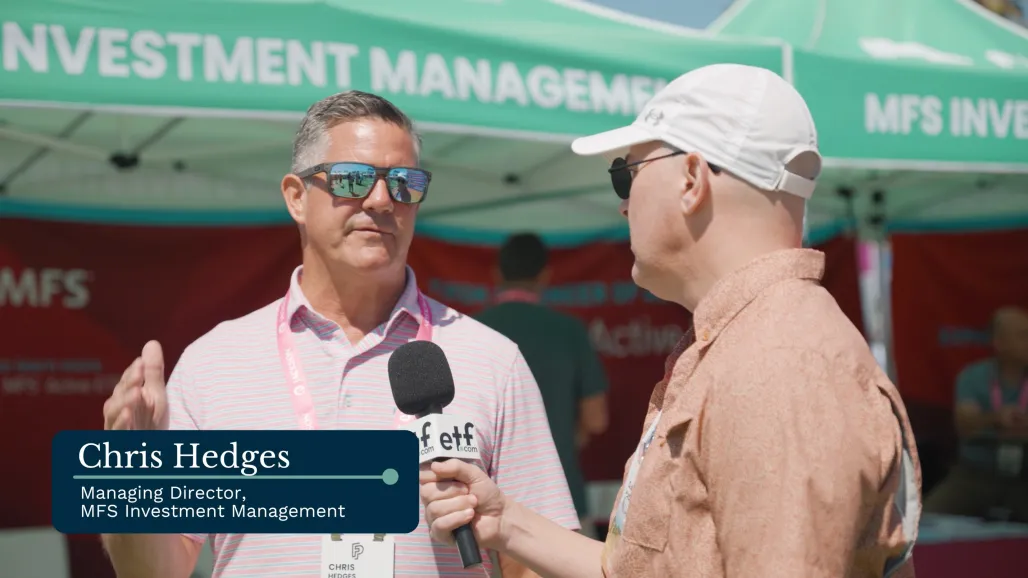
For those investors that stuck it out in international however, the value of diversification coupled with patience paid off this year according to Chris Hedges, Managing Director of MFS Investment Management.
Mounting Frustrations Lead to Divestment Over Time
“International, up until this year, has been definitely a piece of portfolio frustration, if you will. People keep wondering and asking, 'When is it going to outperform? When is it going to outperform?'
Well, here we are. You have a situation where the U.S. market's doing just fine, thank you very much, but international is actually showing its stripes. Seems to be a very good valuation situation internationally, so I think people are generally happy that they stuck with that. It really speaks to diversification and why you do it even though you can get impatient with it.”
Chris Hedges, Managing Director, MFS Investment Management
For more from this conversation, go here.
Growth and Timeliness of International Investing
Investors have a number of options when looking to increasing international equity exposures. From active ETFs that dig into individual company metrics to country-centric strategies, there's a plethora of choices. Even passive exposures get sophisticated, with index methodologies that screen for certain desired factors, some more nuanced than others. Perth Tolle, founder of Life + Liberty Indexes, breaks down where the firm believes strongest opportunities lie in international long-term as well as why now is the right time to invest.
Where to Look for the Best Growth Stories
"You want to be in the countries where there is strong rule of law, there is strong institutions, and there's strong protections for personal and economic freedoms. And those are the places that we're going to find the best growth stories going forward because they're conditioned to support those types of businesses."
On Being Late to the Party
“I think that's a common problem. It's not too late, though. There's a long way for emerging markets and international to run. It's still cheap compared to U.S. – very cheap. So, I think there's a lot of room to run, and it's never too late to diversify.”
Perth Tolle, founder, Life + Liberty Indexes
For more from this conversation, go here.