Why CANE Is Riding a Sugar High
Sugar futures broke out last month, reaching the highest price in over a decade.

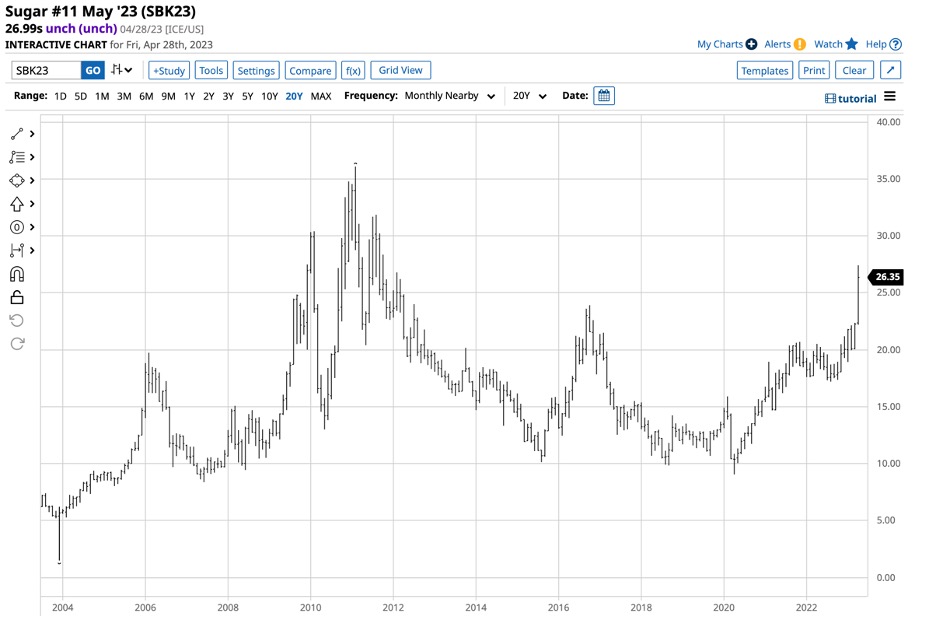
The trend is always your best friend in markets, and sugar has been on a bullish path since reaching a pandemic-inspired 9.05 cents per pound in April 2020.
World sugar futures, which trade on the Intercontinental Exchange in the soft commodities sector, rose more than 11% in the first quarter, after a better than 6% rise in 2022.
The Teucrium Sugar Fund (CANE) tracks a portfolio of three ICE sugar futures and has become sweeter over the past two years. Sugar futures broke out to the upside last month, reaching the highest price in over a decade.
Sugar Upside
Sugar futures have nearly tripled from the April 2020 low.
Source: Barchart
The chart of the nearby May ICE world sugar #11 futures contract shows a nearly 200% rise from 9.05 cents to 27.41 cents per pound. Sugar futures eclipsed the critical technical resistance level at the October 2016 23.90 high, with the next targets at 31.85, the August 2011 high, and 38.06 cents per pound, the February 2011 peak.
Leading Free-Market Producer
Many countries consider sugar a national security matter because of food requirements, subsidizing production to ensure supplies. Subsidies distort the fundamentals, as they create artificial prices above the levels that supply and demand dictate. Moreover, many sugar-producing countries limit exports to allow for meeting domestic demand requirements.
Source: Statista
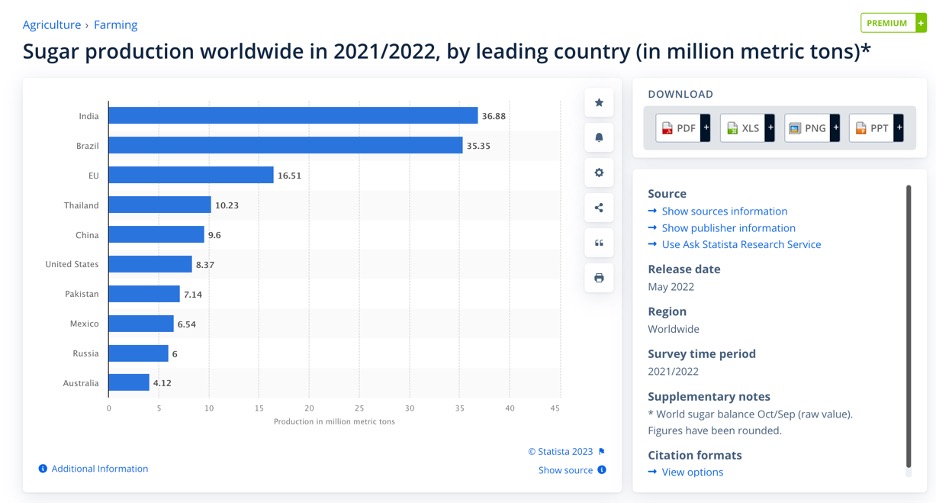
The above chart shows India was the leading sugar-producing country in 2021 and 2022, but Brazil was a close second. Brazil produces free-market sugarcane that most impacts the world price. Therefore, Brazilian sugar fundamentals are the most influential factor for the ICE sugar futures market.
Sugar Is Food and Fuel
While sugar is a significant input in many foods consumed worldwide every day, sugar is also a critical ingredient in ethanol. The ethanol mandate in the U.S., the world’s leading corn producer, calls for blending gasoline with corn-based biofuel. In Brazil, sugarcane output makes the sweet commodity the biofuel input.
The U.S. and Brazil are the world’s leading ethanol producers, accounting for 82% of biofuel output, according to the Department of Energy. Therefore, free-market sugar prices are highly sensitive to biofuel demand and prices.
CANE Minimizes Roll Risk, Tracks Sugar Futures Prices
At $13.85 per share, CANE had $38.73 million in assets under management. It trades an average of over 141,600 shares daily and charges a 1.14% expense ratio. The ETF tracks a portfolio of ICE sugar futures with three different expiration dates to minimize the risks of rolling from one contract to the next.
Sugar, and other agricultural commodity futures, can become highly volatile when nearby futures expire. The most price variance tends to occur in the nearby futures contract because it attracts the most speculative interest. CANE tends to underperform sugar during rallies but outperforms the sweet commodity futures during downside corrections.
Source: etf.com
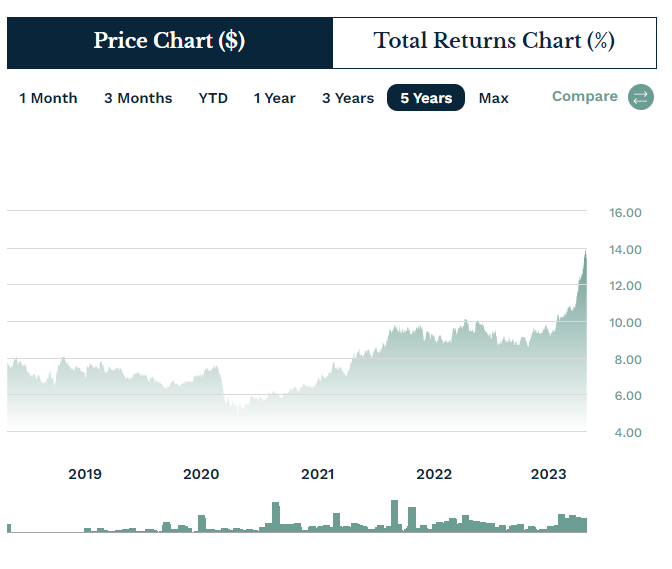
The above chart highlights CANE’s rally from $4.91 in April 2020 to $14.00 per share in April 2023. The 185% rally slightly underperformed the continuous contract ICE sugar futures contract over the period. In 2023, the etf.com Fund Flow Tool shows $3.95 million flowed into CANE.
Three Reasons for a Sweet Future
Three factors support more gains in the sugar futures arena and CANE:
- The price path of nearby sugar futures remains higher, and the trend is always your best friend in markets.
- Sugar supplies are tight, with lower-than-expected output in India, Thailand and China. Rains in Brazil have slowed the sugarcane harvest.
- Global inflation is causing production costs for all commodities to rise, putting upward pressure on prices, and sugar is no exception.
Sugar’s price has tripled since the 2020 low, but the trend remains higher. Sugar futures broke above the critical technical resistance level at 23.90, with the next targets above 30 cents per pound. CANE has been a sweet investment over the past two years and could continue delivering profits over the coming weeks and months.